
Careers in Peacebuilding: From Professor to Peace Corps—Dr. Darlene Grant’s Journey
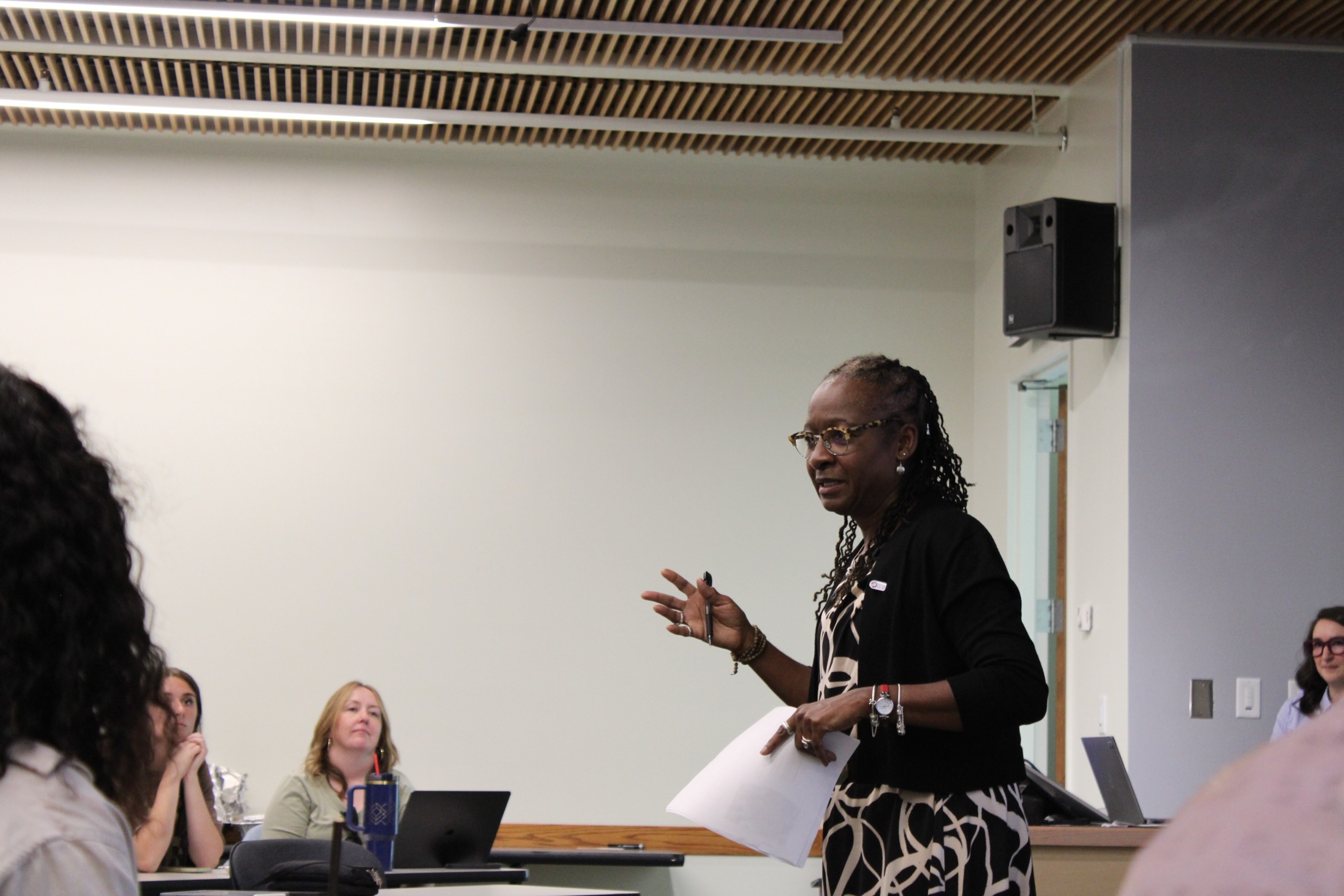
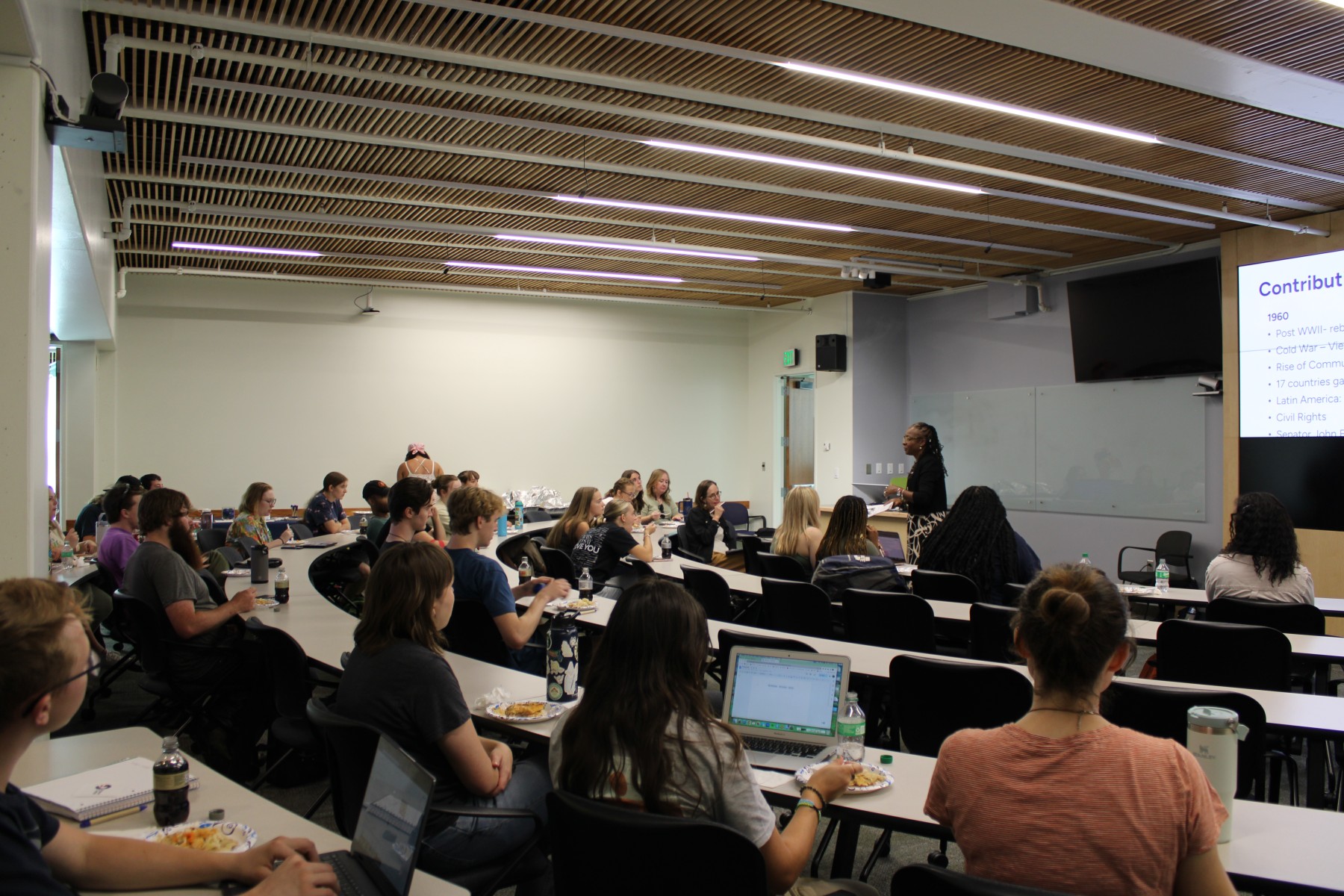
Dr. Darlene Grant, an award-winning educator and seasoned Peace Corps leader, delivered an inspiring talk to Utah State University (USU) students at the Merrill-Cazier Library this September. The event, co-hosted by the Center for Community Engagement and the Heravi Peace Institute, brought together students eager to learn about global peacebuilding and humanitarian efforts. Dr. Grant, who has been serving with the Peace Corps since 2009 in countries like Cambodia and Mongolia, shared her extensive experience as a social worker and Peace Corps volunteer, emphasizing the transformative power of community partnerships and global citizenship.
In her talk, Dr. Grant highlighted the importance of understanding the context in which peacebuilding efforts take place. From Vietnam—where Peace Corps programs have been met with initial skepticism—to the evolving needs of partner countries, she discussed how Peace Corps volunteers help bridge cultural divides while promoting mutual understanding. Volunteers, who range in age from 20 to 86, work across a variety of sectors, with education being the most in demand. Dr. Grant also noted the growing role of virtual volunteering and Peace Corps' domestic collaborations, including partnerships with AmeriCorps to address crises like Hurricane Katrina, youth incarceration at the border, and the COVID-19 pandemic.
The Peace Corps' approach to safety, bilateral agreements with host countries, and a commitment to listening and partnering with local communities were key themes in Dr. Grant’s talk. She underscored that volunteers are there not to impose American norms but to engage with and learn from the best tools available—often the people and cultures they serve.
Can you tell us about your background and what led you to join the Peace Corps?
I had been pondering whether to take a Fulbright year or a sabbatical when the idea of joining the Peace Corps came to me. I boarded a plane to Cambodia at the age of 49, having already established myself as a tenured professor at the University of Texas at Austin. My upbringing—particularly the moments spent with my grandmother during the civil rights movement—instilled in me a deep sense of duty to serve my community. I realized that service was about survival, courage, and respect, especially for those treated as lesser than others.
What was your initial experience like as a Peace Corps Volunteer?
My first task, like many volunteers, was to build a relationship with my host family. I learned a complex language and immersed myself in a nuanced culture. I was so grateful for everything I had learned about human behavior and intercultural relations, but I quickly realized that listening and learning from the community was crucial.
How did your Peace Corps service shape your professional journey?
After completing my 27-month service, I returned to my professorship, but my experience had fundamentally changed me. Shortly after, I was invited to serve as the Country Director for Peace Corps in Mongolia. In this role, I was responsible for leading diplomatic relationships and ensuring the safety and meaningful work of Volunteers. This position taught me the importance of collaboration and building connections between people, which continues to influence my leadership style.
What are some of the key values you believe Peace Corps instills in its Volunteers?
I believe Peace Corps instills the values of empathy, listening, and engagement. We learn not just to bring our American norms into a host country but to work alongside the community, using their best tools and resources. The key to successful service is to listen and learn about the hopes and dreams of the people we serve. It is vital for both efficacy of serving, and the lasting relationship with the host country, for the volunteers to understand the needs of the people, rather than assuming a saviorism role as an outsider. Some volunteers learn the host language for a whole year before beginning to serve. We are invited to serve, and partner with the community, not to save it in the way we think is best.
The world is so small; Peace Corps amplifies how close I am to people 13 hours away,
How has your work influenced your views on service and leadership?
My experiences in the Peace Corps have taught me that service is about co-creating opportunities for change. It’s essential to put oneself in the background and focus on listening and empathizing with others. True leadership is about bridging differences and enabling others to overcome barriers.
Can you share a memorable moment from your time in the Peace Corps?
One of my proudest moments was meeting with the President of Kosovo, discussing the value of bridging cultural differences to achieve educational goals. That experience highlighted the powerful connections that can be formed through our people-to-people approach.
How do you view the role of cultural understanding in your work? Cultural understanding is vital in our work. Learning a host country's language, participating in customs, and sharing meals are all part of the experience. These actions help us navigate differences and forge strong connections, which ultimately enhances the effectiveness of our service.
What advice would you give to students considering a career in peacebuilding or international service?
I would encourage students to embrace their unique backgrounds and experiences. Each individual's journey in service is personal, and by being open to learning and sharing who you are, you can make a significant impact. It is important to expand your definition of what “peace” is. To embrace not only what it means to you, but also how others may define themselves, and then take the time to build relationships across differences; that’s where real change happens.
Interested about joining the Peace Corps? Visit Center on Community Engagement Peace Corps Prep Program at https://www.usu.edu/peace-corps-prep/
Visit our Social media for more upcoming events like this one!