
Transitional Justice in Bosnia, Croatia, and Serbia
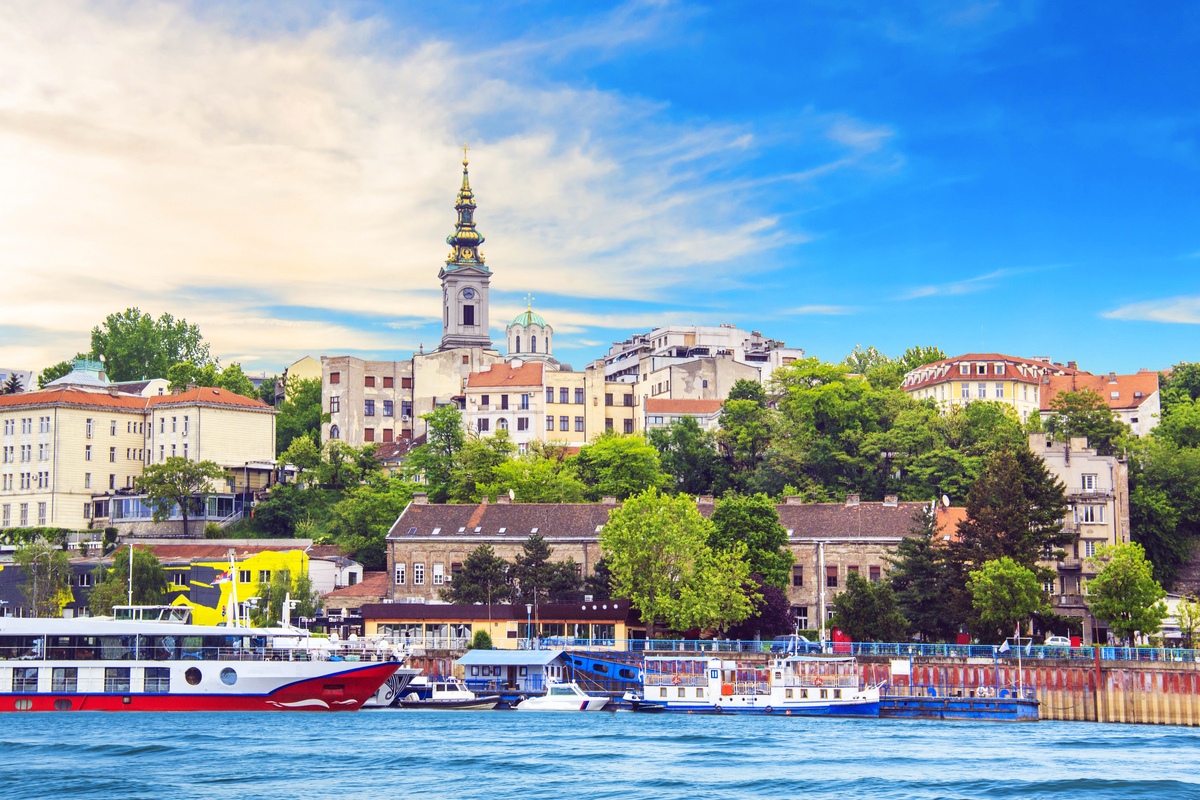
In Belgrade, the walls still bear the scars of war. Bullet holes marking stories that were never fully told. In Srebrenica, more than 8,000 names of murdered Bosniak men and boys are carved into marble. And in classrooms across Brčko, the wars of the 1990s -when over 100,000 people were killed and millions displaced- are often not taught at all. Early last summer, I traveled through Bosnia, Croatia, and Serbia with Professor Shannon Peterson and a group of USU students to study transitional justice and post-conflict recovery. In our journey to understand the conflict and life in the aftermath of war, I was confronted by the physical remnants of war at every turn. Everywhere I looked I saw bullet-riddled buildings, abandoned homes, craters, and crumbling infrastructure. These visual reminders make it impossible to ignore the Balkan’s troubled past, yet they exist alongside a political system that remains unwilling to acknowledge it in a unified and constructive way. The landscape itself seemed to remember, even when some leaders preferred not to. That contrast between the visible wounds of the land and the invisible silence of politics truly stayed with me.
The Yugoslav war may have ended in 2001, it's clear that its consequences are still pervasive. The 1995 Dayton Accords ended the fighting but also froze the divisions that fueled it. Power remains fragmented; corruption fills the gaps where institutions failed; and nationalist rhetoric still dominates the political stage. It’s easy to look at all that and feel that progress is impossible.
Each day of our journey was filled with conversations, site visits, and inspiring examples of people doing meaningful work despite political dysfunction. Where the government has failed to lead, citizens have stepped up. Grassroots organizations, activists, and local NGOs are finding creative ways to confront the past, promote accountability, and rebuild fractured communities. Their determination made me realize that peacebuilding doesn’t always look like sweeping political reform. Sometimes, it’s a small act of resistance. Sometimes, it’s simply refusing to forget.
I met journalists, educators, and NGO workers committed to documenting the truth, preserving testimonies, and creating space for dialogue. One moment that stood out for me was in Belgrade, where we learned about the Youth Initiative for Human Rights (YIHR). Every year, on White Armband Day, people across the region wear white bands in remembrance of the non-Serb victims of Prijedor, where thousands were detained, deported, or killed in 1992. Local authorities still refuse to allow a memorial, yet every May 31, citizens take to the streets in quiet defiance.
Those white armbands became, for me, a symbol of what transitional justice really means. Not just legal resolutions, but courage, empathy, and collective memory. The people we met showed that even when governments resist reckoning, individuals can still choose to remember, to act, and to hope.
Interested in study abroad opportunities by Heravi Peace Institute, visit this page

Meet the Author: Emma Martins
Emma Martins is a junior studying Political Science, with minors in Arabic and Religious Studies. She is also pursuing a certificate in Global Peacebuilding, while serving on the Heravi Peace Institute Student Advisory Board. She is passionate about the intersections of international relations, religion, and human rights, with a particular interest in grassroots peacebuilding. In her free time, Emma loves to read and collect books from each new place or country she visits, building a personal library full of stories from around the world.