
Studying in Vietnam
Landri LaJeunesse Writes About Her Semester Abroad with Heravi Peace Institute.
Three months ago, I traveled to Vietnam with a group of Utah State University students and professors on a program to study conflict, history, and reconciliation firsthand. For ten weeks, we lived and learned in a country once devastated by war, working to understand what peace means in a place where its absence was once deeply felt.
From the beginning, our journey was rooted in questions: How does a country recover from war? What does peace look like fifty years later? What can we do to foster reconciliation?
Searching for the answers, we visited historical sites and memorials throughout our program. We stood in the War Remnants Museum in Ho Chi Minh City, floated down the Mekong Delta in Can Tho, and walked through the Vinh Moc tunnels in Hue. We also built new memories: singing karaoke with our Vietnamese friends, wandering the lantern-lit streets of Hoi An, getting lost in the neighborhoods of Danang. Slowly, the schooling we came for shifted from history lessons to lived experience.
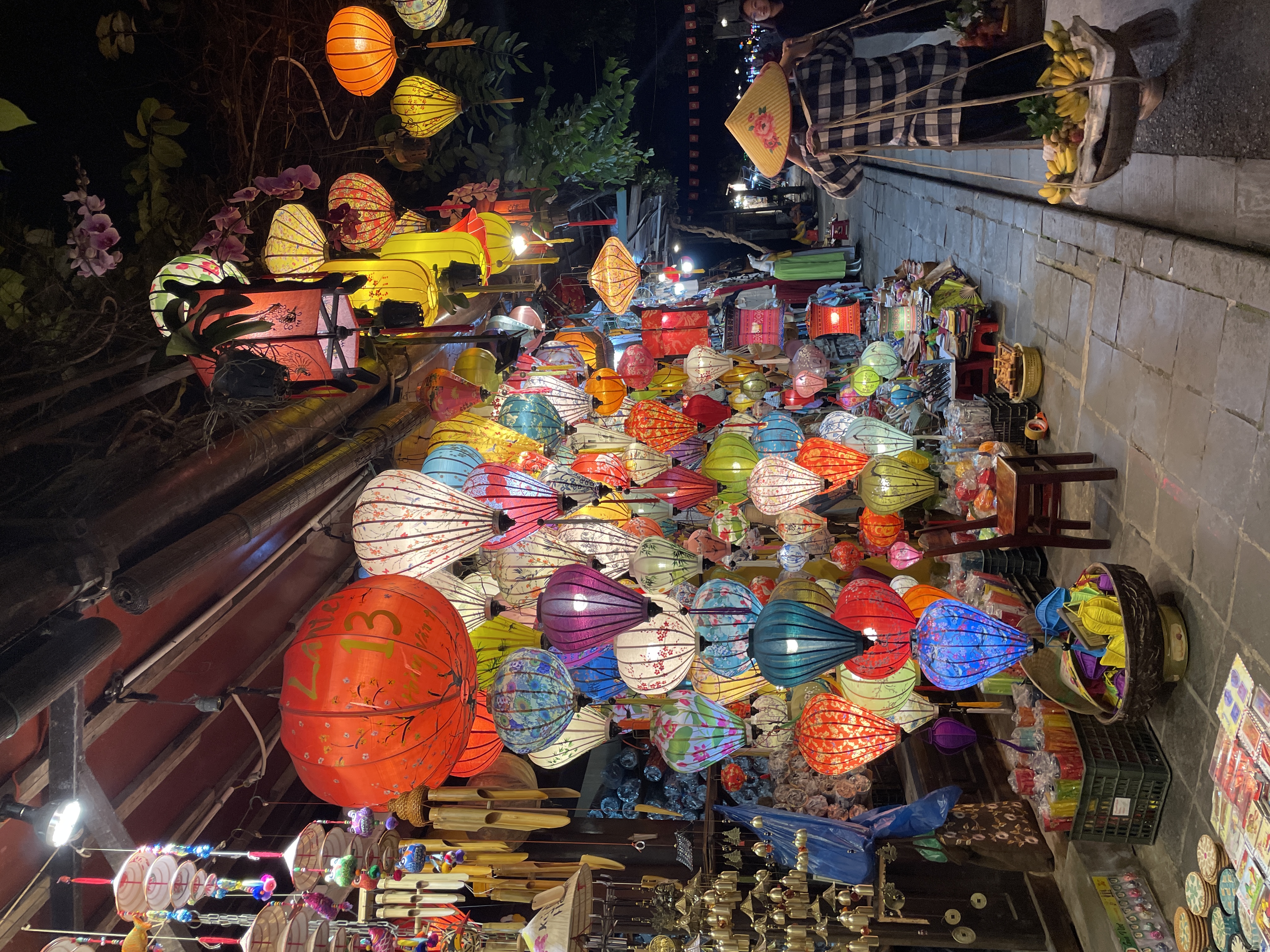
The lantern-lined streets of Hoi An.
At the same time, my idea of peace was transformed as well. Before the trip, I thought of peace as something quiet. Back home in Utah, I often found it in a library or on a hike, but in Vietnam, peace has a sound. From the honking of motorbikes to the hum of market stalls, it is rarely silent. At first, this commotion felt like chaos, but it soon began to feel more and more like home as we grew accustomed to the noise.
As I tried to grasp what that meant for me, I kept returning to one question: How do you foster reconciliation? It was a heavy subject, and often overwhelming. However, throughout our stay in Vietnam, peace started to look and sound so much different than the quiet image I’d held in my head. It wasn’t found in a library corner or a quiet moment alone, but in the bustle of markets, the chatter between friends, the laughter shared between Vietnamese and American students, all choosing to move forward instead of staying in the past.
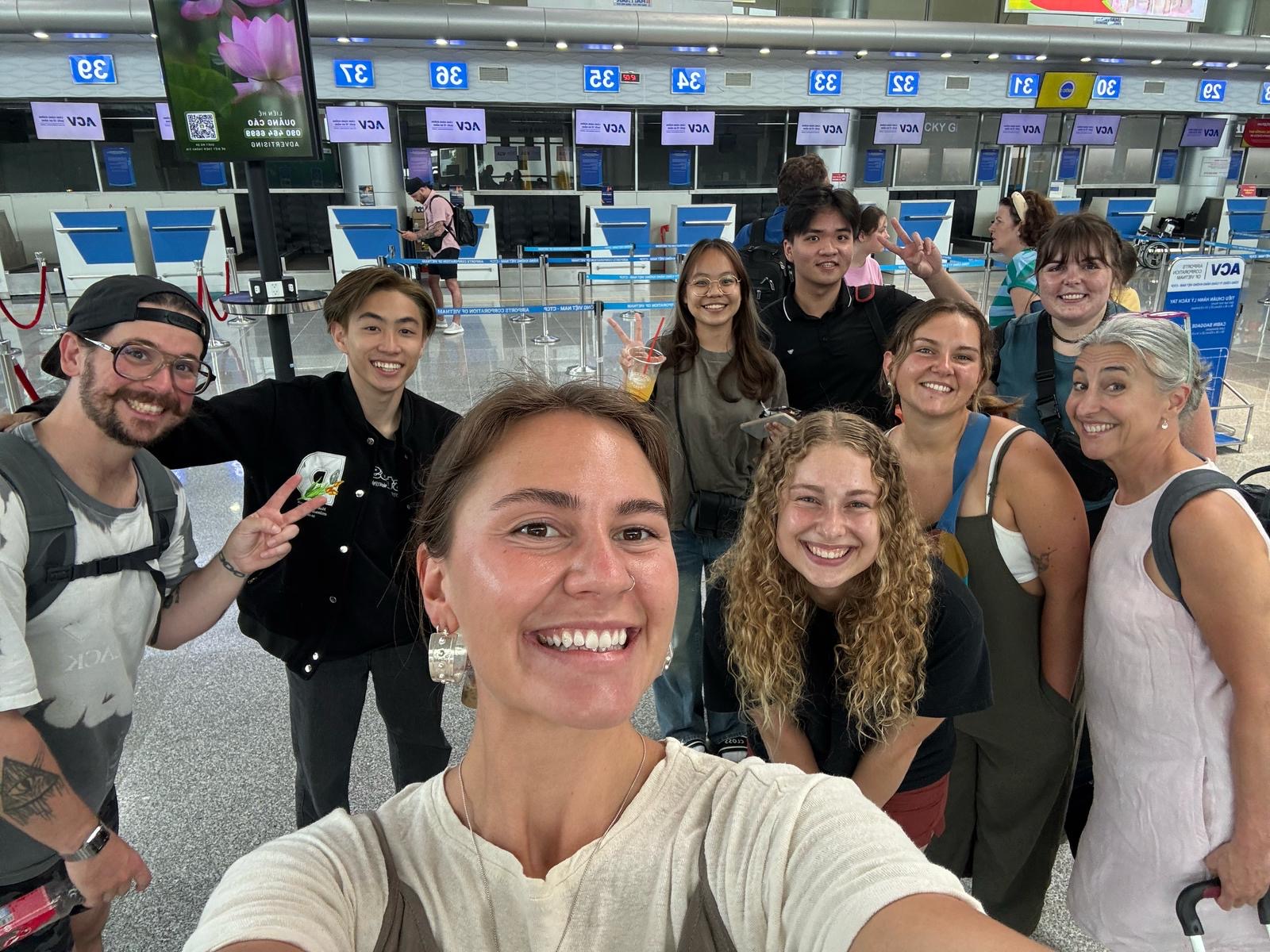
The HPI study abroad group poses for a photo, saying goodbye to our friends from Danang.
From there, I came to understand peacebuilding as a process of remembering, rebuilding, and reimagining in the present, instead of a single moment of resolution rooted in what we can’t change. I went to Vietnam to “find” reconciliation, but all that I found is a daily practice in choice, seeking connection over division, choosing hope over despair.
After meeting so many people and having experiences I never would have otherwise had, I learned how quickly forgiveness and shared experience can bring people together, even in the most unlikely circumstances. If you had asked me a year ago if I would even visit Vietnam, I would have looked at you in disbelief. Now, I have a connection to Vietnam that will forever be a part of not only my education, but my life as well.
Living and learning in Vietnam taught me that peace isn’t an end product, but an ongoing effort. I learned to embrace discomfort, to have hard conversations, to have fun, and to look for something good everywhere I go. This experience showed me that peacebuilding is not neat or easy, but if you look and listen closely, you’ll start to notice it’s all around you, even in all the noise.
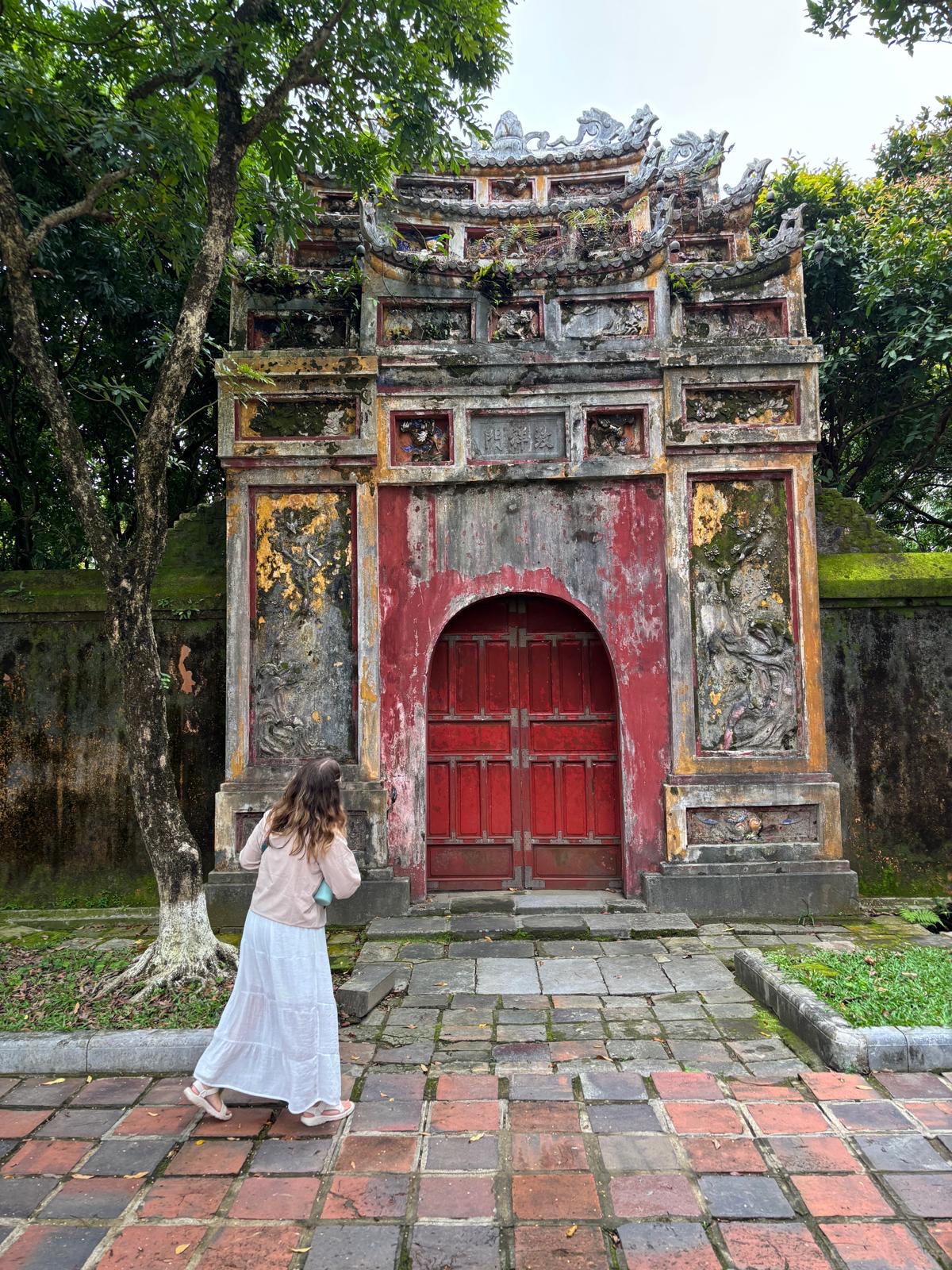
I wander the grounds of Hue’s Imperial City.
Landri LaJeunesse is a third-year student majoring in journalism and communications and minoring in Yoga Studies. She spent her spring semester in another country, but she will be settling down in the fall, working as a study abroad peer advisor and taking time to search for her next adventure. She enjoys all things travel, true crime and tiramisu.
You can read more about Landri’s Vietnam experience through her blog posts at https://usustatesman.com/category/features/hpissemesterinvietnam/.