
Repainting the I: Preserving Culture through Art at the Intermountain Indian School
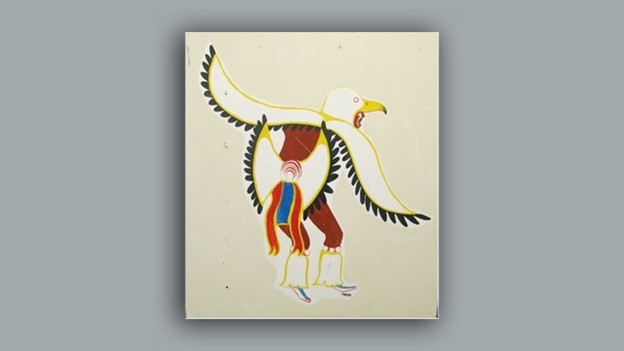
A Hopi Eagle Dancer by Rex Walter
How do you try to find peace in a world that aims to erase your identity? Students at the Intermountain Indian School in Brigham City sought an answer to this question in the period between the 1950s and the 1980s by using art as a tool of subtle defiance and to acknowledge their cultural heritage and stories. This powerful collaborative artistic resistance is now being preserved and shared with the public through the Nora Eccles Harrison Museum of Art (NEHMA) exhibit, “Repainting the I: The Intermountain Intertribal Indian School Murals”. These murals provide a deeper look into preserving identity, culture, and community, and they highlight how art can be a powerful tool of self-expression, healing, and connection. The installment features eleven murals taken from the Indian school before it was torn down, as well as a series of 38 photographs of the abandoned school titled “Eagle Village” by Sheila Nadimi.
The exhibit showcases the presence of intertribal co-existence and cultural exchange. By allowing students with various tribal affiliations to portray representations of their culture onto the walls of the boarding school, the administration fostered a sense of Native American community at a time when many boarding schools insisted on assimilation. The murals highlighted a variety of nations, tribes, and communities, and many pieces such as, “The Hopi Eagle Dancer” by Rex Walter and a depiction of a Northern Paiute by an unknown student, reflecting the importance of preserving heritage through art.
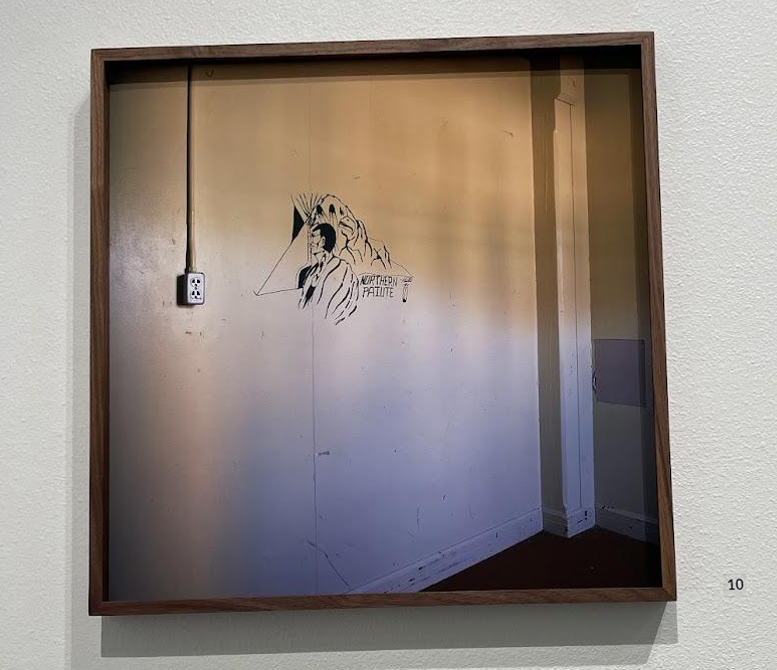
A drawing of a Northern Paiute man standing
in front of mountains on a dormitory wall
The goal of the more than five hundred American Indian boarding schools in the United States was to assimilate Indigenous students, raising new generations without their cultural heritage. However, by painting representations of their culture and identity onto the physical manifestations of their cultural silencing– the boarding school walls– students and teachers alike reminded themselves of where they came from and ultimately preserved their struggle.
Walking through the exhibit one cannot help but wonder how children made sense of such emotional and taxing experiences. For many students, processing this education through spoken words alone would have been difficult. Creating art allowed the kids to narrate what was happening around them, in a way that was familiar and known. According to Janet Berlo and Ruth Phillips, "The visual arts have long played a critical role as carriers of culture within Native American societies. They are also among the most eloquent and forceful articulations of the contemporary politics of identity."
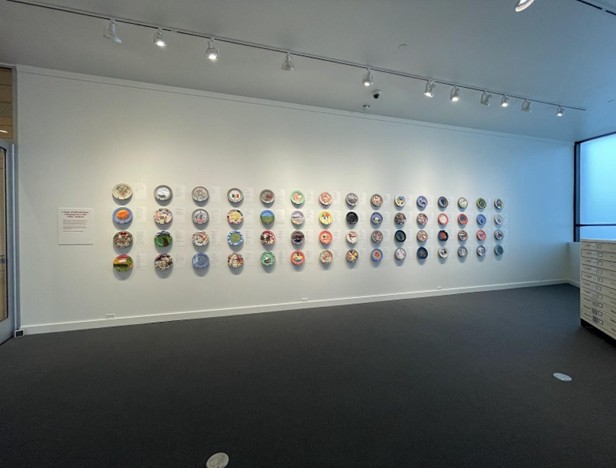
60 colored plates with unique designs on each of them
arranged in 4 by 15 grid. Photo by Kai Li Tullis
While many murals were lost when the buildings were razed to make room for the new Utah State University campus in Brigham City, the university, school alumni, and community members cooperated to save some of this artistic outpouring. By displaying the murals that still exist alongside photographs of the old school’s walls, “Eagle Village” and “Repainting the I: The Intermountain Intertribal Indian School Murals” aspire to never let us forget the atrocities that Indigenous people endured in US history and their resistance. Beyond remembering history, the exhibit also engages visitors in reflecting on their own cultural identities. In addition to the murals and pictures, the collection features painted plates from local high school students who were instructed to answer the question, “What would you paint to remember home?”. The installation is interactive with a section highlighting the poem “I am from,” and encourages museum-goers to create a poem of their own, drawing from their own heritage and culture. For those interested in exploring the intersection of history, identity, and artistic expression, this exhibit offers a compelling and immersive experience. The murals were not only an expression of remembering what was lost through generations of violence, but of remembering and celebrating all that was left behind.
The exhibit runs through December 6, 2025, at the Nora Eccles Museum of Art on Utah State University’s Logan campus. Visitors can also see art from the school at the USU Brigham City campus and on the hillside above the city—where the “I” is repainted each year by school alumni and friends.

While attending the Repainting the I Exhibition Panel Discussion, she was particularly moved by a quote from Peggy Barker, former art teacher at the Intermountain Intertribal Indian School: “We are all artists; it's just about finding your materials and what you want to say with them.”