
Transformative Mediation Certification Training
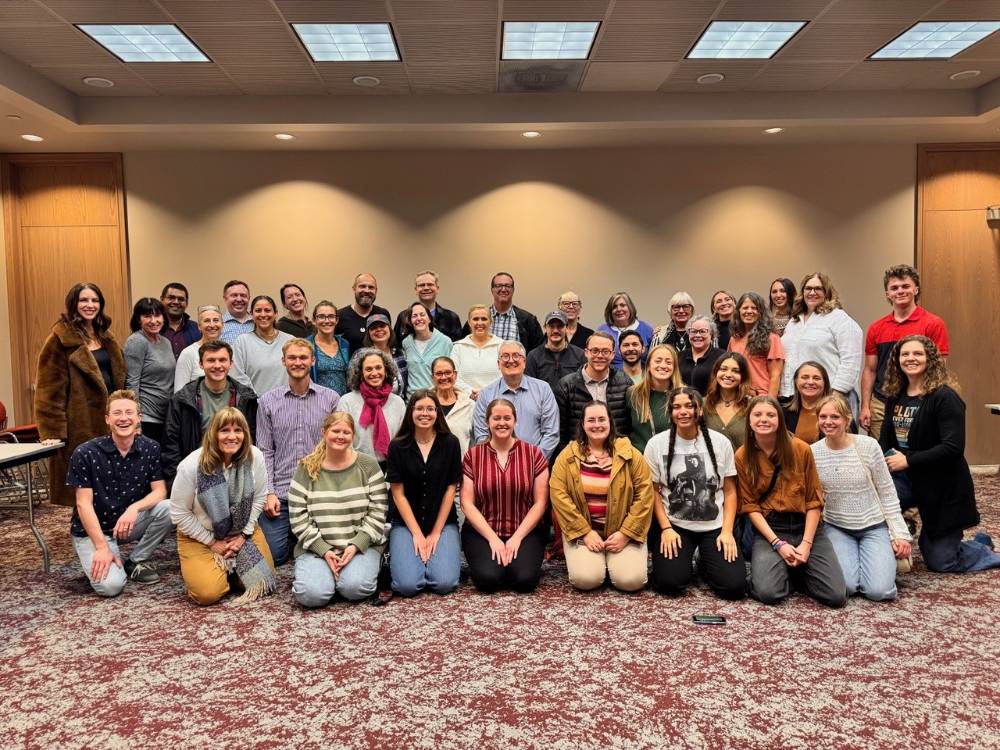
Utah is leading a quiet revolution in how we deal with conflict.
In a world that often treats conflict as something to be managed, minimized, or won, transformative mediation offers a different path — one that seeks understanding, connection, and change.
Most traditional, or transactional, mediation approaches focus on settlement: getting from dispute to deal as quickly and efficiently as possible. That has its place — but it often leaves the deeper causes of conflict untouched. People may leave with an agreement, but not with healing.

Cohort 3
- Law and Justice Center, Salt Lake City, Utah
- April 16-18, 2026 (30 hours in person)
- Follow-up Online Modules: 10 hours (Summer/Fall 2026)
- Tuition: $1,500
- Space limited to 25 participants
Applications are now open for the third cohort of the Transformative Mediation Certification Training.
Transformative mediation shifts the focus from resolution to transformation. It invites participants to:
- Reclaim their agency — to see their own role and power in conflict.
- Recognize others — to listen deeply and see the humanity in those they disagree with.
- Rebuild relationships — to move from distrust to dialogue, from fear to connection.
This training is designed for attorneys, mediators, social workers, HR professionals, therapists, educators, and nonprofit and corporate leaders — anyone whose work regularly encounters conflict and who wants to turn those moments into opportunities for growth, collaboration, and healing.
As one participant said after completing the training,
I came expecting techniques for better mediation. I left with tools for becoming a better human being.
The Trainer

Chad Ford
Associate Professor, Utah State University
Author of Dangerous Love: Transforming Fear and Conflict at Home, at Work, and in the World and Seventy Times Seven: Jesus’s Path to Conflict Transformation
Chad Ford is an internationally recognized mediator, peacebuilder, and educator who has spent more than two decades teaching, training, and facilitating transformative dialogue across the globe. As a faculty board member of Utah State University’s Heravi Peace Institute, he leads efforts to expand conflict transformation capacity across Utah’s campuses and communities.
Chad’s work has taken him into schools, boardrooms, courtrooms, and post-conflict regions worldwide. He has worked with organizations such as the United Nations, the International Olympic Committee, and PeacePlayers International, helping people transform fear and division into empathy and connection.
At Utah State, he teaches PI 3110: Transformative Mediation, an undergraduate course that introduces students to the same principles of empowerment, recognition, and relational repair that underpin this certification — creating a bridge between academic learning and real-world practice.
What Happens in This Training
Over three immersive days, participants experience the full arc of transformative mediation through interactive instruction, reflective exercises, and live role-play.
Day 1 – The Inner Work of Mediation
- Participants begin by grounding in the foundations of conflict—how fear, identity, and power shape human interaction. Through sessions on Transformative and Narrative Mediation and The Inner Work of Mediation, mediators learn how self-awareness, humility, and presence create safety and curiosity in the room.
- The afternoon focuses on The Pre-Mediation Process—building trust, mapping conflict, and preparing parties for dialogue. A live fishbowl role play lets theory become practice, followed by feedback and a large-group reflection on empowerment and recognition.
Day 2 – Narrative and Relational Dimensions
- Day Two explores how story and worldview shape conflict. Participants practice Working the Conflict Story, applying the Worldview Lens to see beneath the surface of disagreement.
- Afternoon sessions, When Things Get Tricky, focus on staying grounded through escalation, impasse, and emotion. In Role Play #2, mediators navigate cultural and religious differences while observers give feedback on transformative techniques. The day concludes with a debrief on what it means to create relational change in mediation.
Day 3 – Integration, Ethics & Application
- The final day integrates everything learned. Morning sessions on Problem-Solving and Transformative Approaches, Reconciliation, and Ethics help participants balance professional standards with transformative intent.
- In the afternoon, mediators participate in Integrated Role Plays with Utah State University students—rotating through mediator, observer, and party roles in complex scenarios. Trainers and peers provide structured feedback, and participants reflect on applying these skills across legal, social work, HR, community, and academic contexts.
- The program closes with preparing participants for the online specialization modules and welcoming them into Utah’s growing network of transformative mediators.
- Following the in-person session, participants complete 10 hours of online follow-up training focused on specialized applications, including family, environmental, interfaith, workplace, and social service mediation.
As one graduate reflected,
Each person here has been in training ... to be a highly skilled neutral, a space maker, and transformative mediator, someone who is now able to help parties in conflict as they transform from those destructive patterns of continuing conflict to more peaceful paths (respectful dialogue, understanding), and especially as parties eventually employ for themselves (w/o a mediator's assistance) the tools (and communication devices) of peacemaking. Think of a world abundant with trained, enthusiastic, dedicated and trustworthy peacemakers! Think of the multiplier effect. Everyone came away from Saturday's concluding session a better person, a more insightful practitioner, and a committed leader who will choose to promote this meaningful practice. Transformative can show up in families, classrooms, communities, workplaces, courts, cases, industries, sectors and any imaginable format throughout the country. Indeed, the better we dialogue, and the better we (respectfully) disagree, the better our whole world will be. One good act leads to another.
Outcomes
Graduates of the Transformative Mediation Certification Training will:
- Earn a Professional Certificate jointly awarded by the Heravi Peace Institute, Utah Dispute Resolution, and Disagree Better
- Qualify for up to 40 hours of CLE credit for attorneys or CEU credit for social workers
- Gain advanced skills in conflict mapping, pre-mediation, deep listening, reframing, and collaborative problem-solving
- Learn how to engage conflict constructively across diverse professional contexts — from family and workplace disputes to organizational, interfaith, and community divisions
- Join a statewide network of transformative mediators and conflict practitioners committed to reshaping Utah’s culture of engagement
Looking Ahead
This training is part of a broader, multi-year initiative to make Utah a national model for constructive conflict engagement:
2026: Launch of a Train-the-Trainer workshop and a Graduate Certificate in Conflict Transformation at Utah State University.
2027: Development of specialty certifications in family, environmental, interfaith, international, and restorative justice mediation.
As Marianne Viray, Executive Director of Disagree Better, said:
The Transformative Mediation Certification Program will equip leaders across sectors and industries to better navigate conflict in their respective spheres. This cohort will model what it means to engage conflict with courage, clarity, and compassion.
A Final Word
Transformation isn’t a concept — it’s a practice. It’s what happens when we choose courage over fear, listening over winning, and relationship over righteousness.
Join us this January at Utah State University or in April at the Law and Justice Center in Salt Lake and become part of Utah’s growing movement to help us engage in healthier, more constructive, transformative conflict.