
FILM 3220 | USU Student Videogames | Spring 2024
The Project
In the spring semester of 2024, students enrolled in FILM 3220 at Utah State University produced and marketed their own videogame. FILM 3220 is a course that explores how videogames interpret classical antiquity via storytelling, visual representation, and interactivity.
The videogame project was a multi-pronged, multi-step endeavor that required students to navigate classical contexts and contemporary practices in the videogame industry. Participants dove into diverse course material that contemplated ancient myth and modern myth-making. Their tremendous work deserves recognition.
Process
Before carrying on with the minutiae of creating a videogame, students were first tasked with finding a classical narrative today’s gamers might find compelling. As an educational product, their game needed to distill ancient sources and academic tradition, not popular belief. How does one make an enticing game about Herakles that does not alter the story to avoid the problematic elements in the myth? How does one present a Herakles that does not rely on Disney’s Hercules or Sony’s God of War?
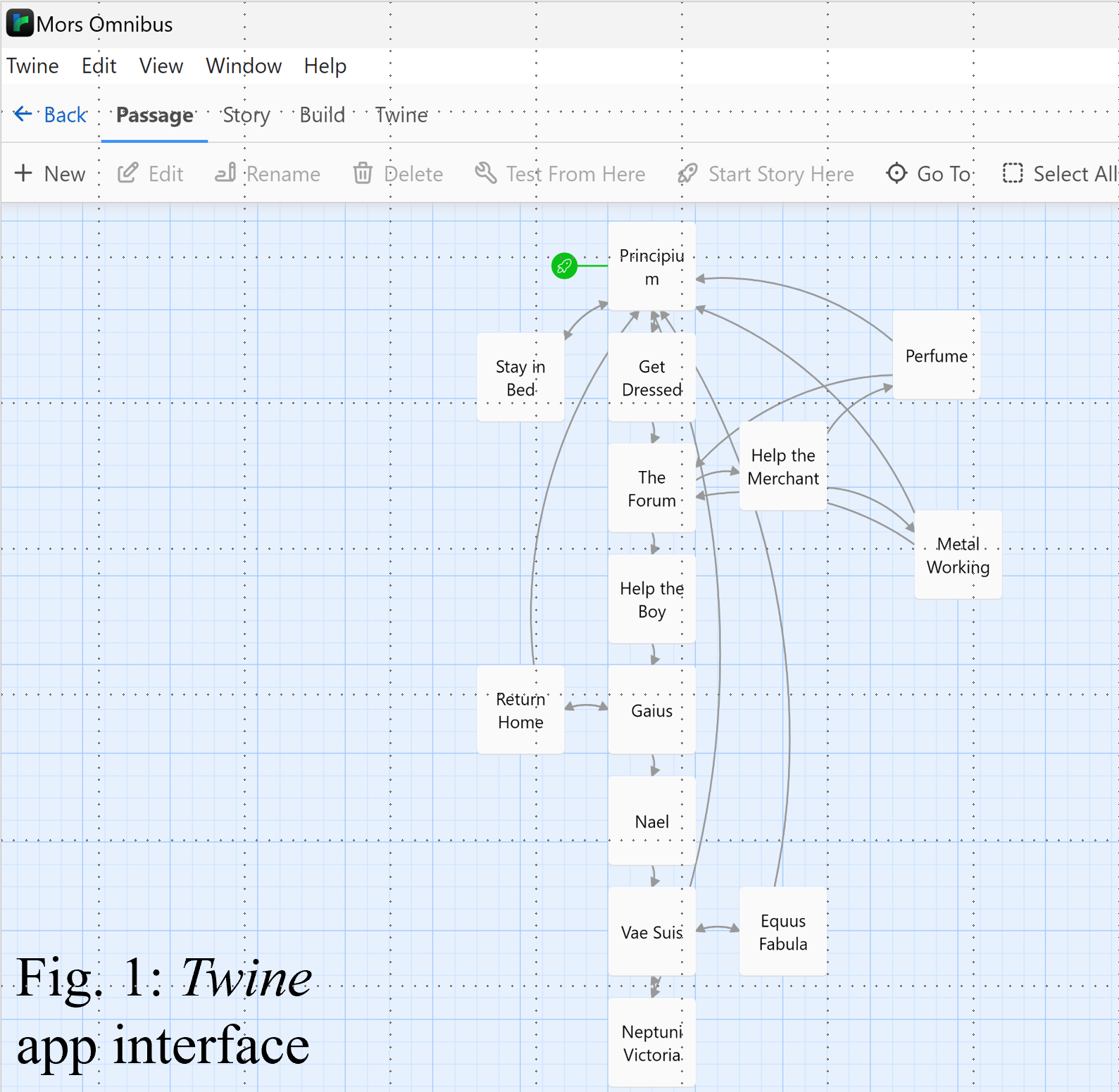
After finding a satisfying topic from antiquity, students had to master the “string of pearls” narrative model employed in videogames. Using a simple application, Twine, they were able to transform their tale into a choose-your-own-adventure game (Fig. 1). The trick was translating ancient morals into modern lessons. How could choosing to make Herakles a nice guy lead to the so-called bad ending?
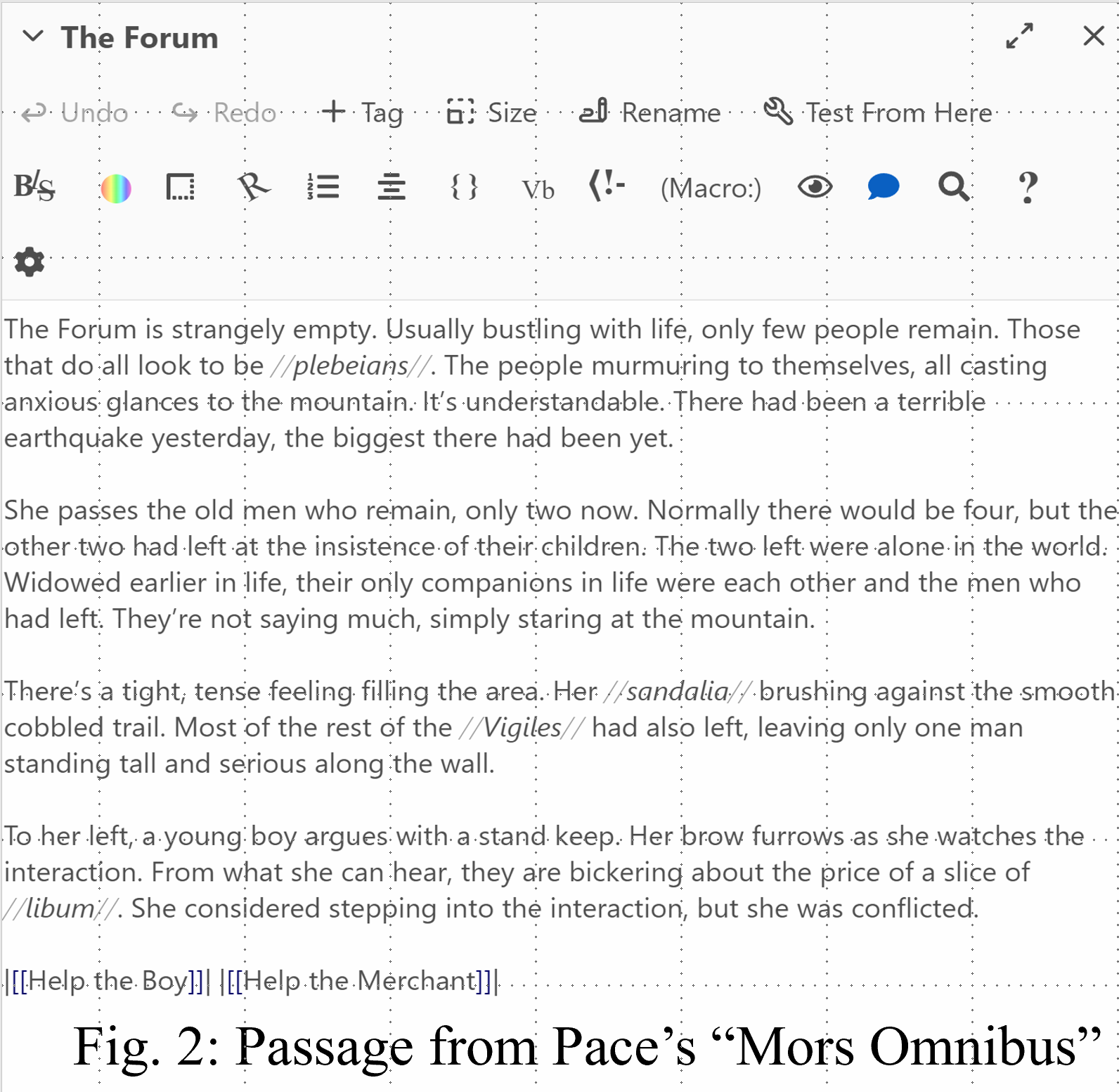
Some students chose historical events while others selected mythology as project foundations. Frances Simpson, for example, used Hermes to challenge players to select between selfish and selfless actions. For her part, Avery Pearson upended the popular view of Medusa in order to relate her tragic origins. Karis Pace relied on the eruption of Mount Vesuvius as the historical backdrop to her game (Fig. 2). With each videogame, a player relying on pop culture or personal proclivities reached unsatisfying endings, reversing course to learn more scholarly perspectives.
Marketing
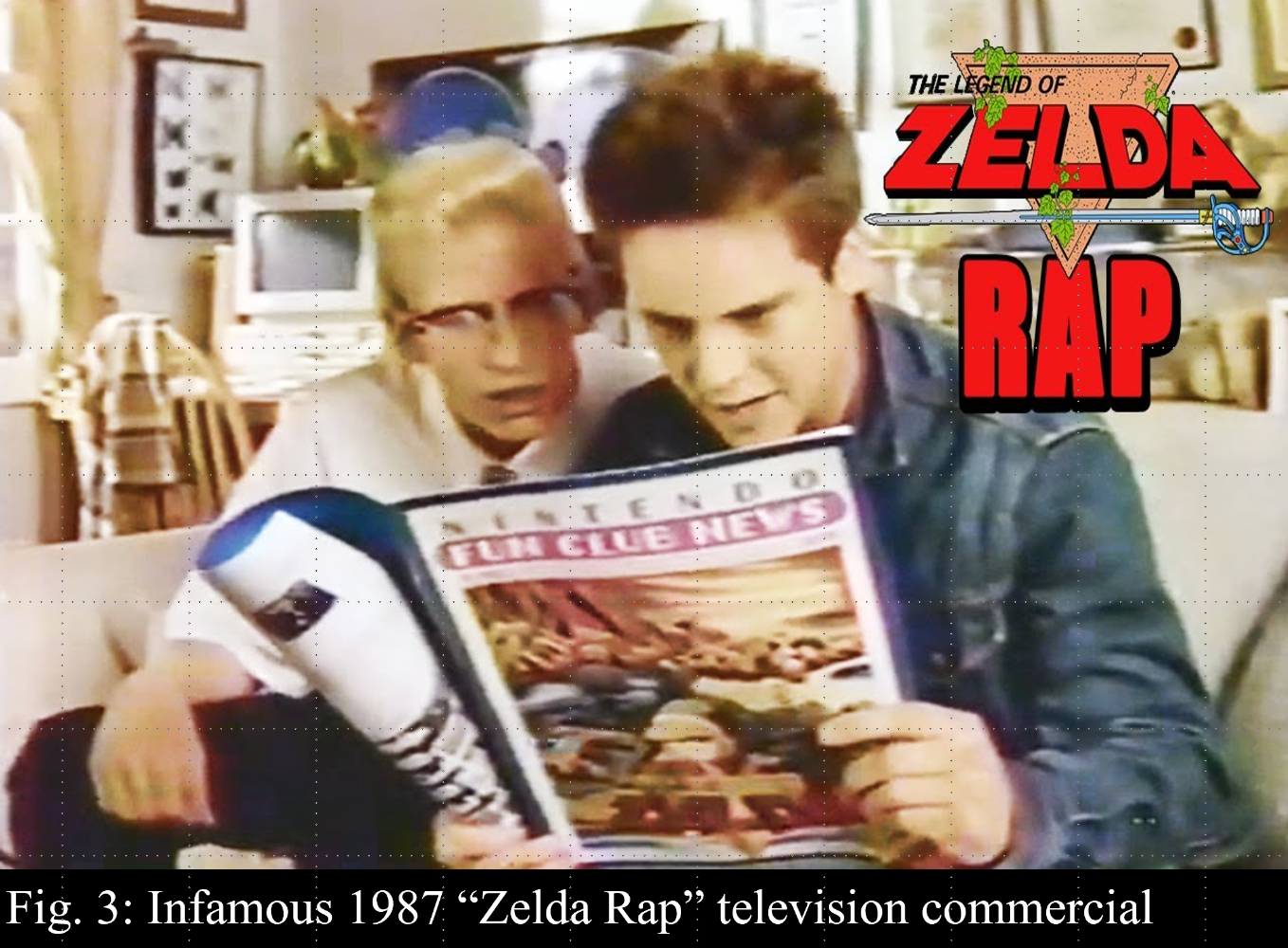
After producing a well-researched videogame on Twine, students had to devise an effective marketing campaign. Class discussions examined past industry advertisements for successful and futile strategies (Fig. 3). How does one entice a gamer to play a text-adventure in 2024?
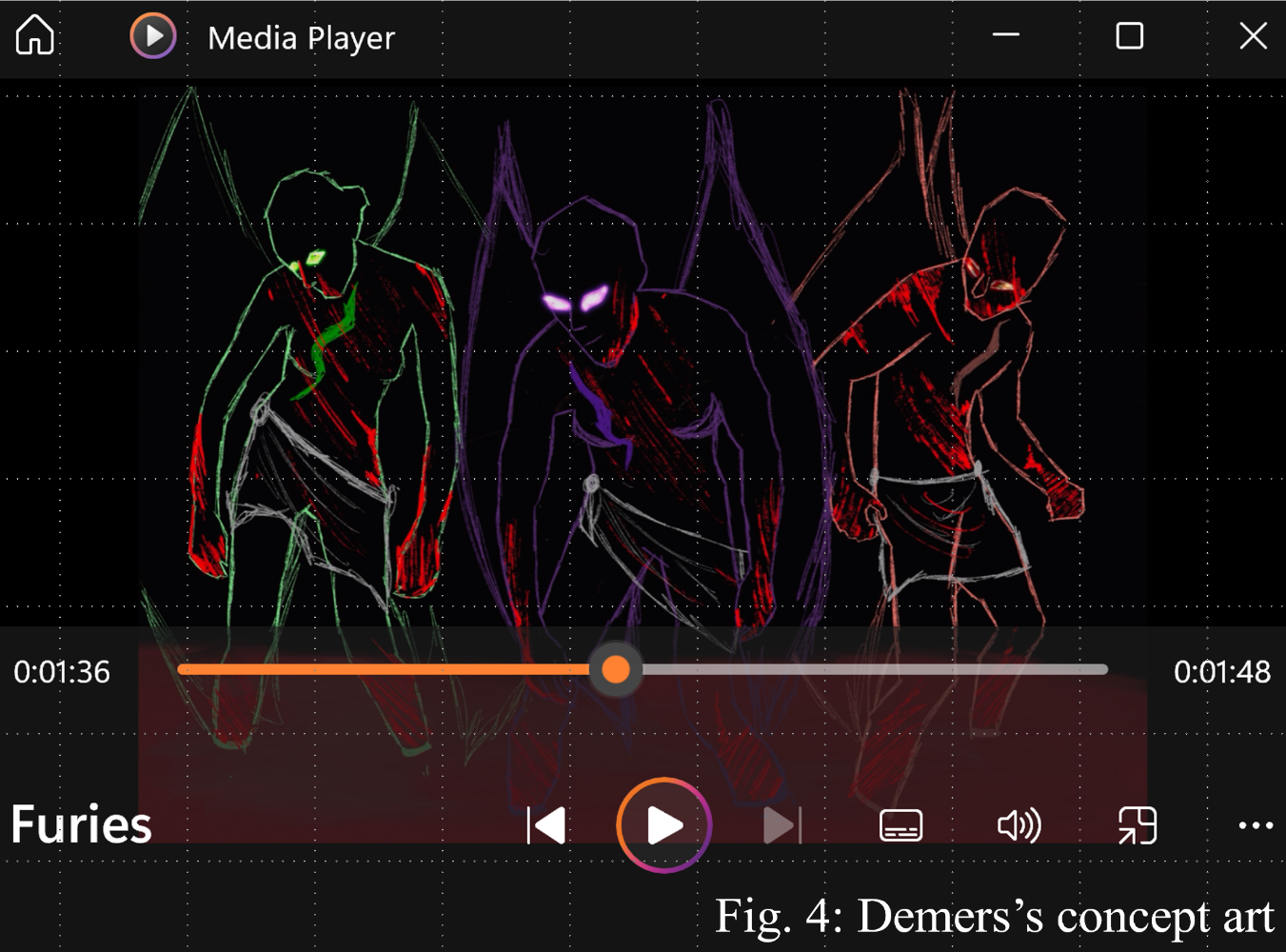
Students produced original artwork inspired by classical art for promotional posters and instruction manuals. The artwork was incorporated into a short video commercial. Max Demers targeted a teen demographic with an edgier design and brooding tone for a game about the terrifying Furies (Fig. 4). Madi Hunn focused on fans of YA romances with traditional images of courtship in an epic game about Cupid and Psyche (Fig. 5).

Conclusion
Lots of reading, watching, and playing went into the production of educational games and thoughtful marketing. Professor Ibarra thanks every participant in the first iteration of FILM 3220 for their hard work and resilience.