
How Can I Join?
Opening Meeting
Thursday, September 4, 5:30 PM, ENGR 101
Attend our opening meeting Thursday, Sept. 4, at 5:30PM in ENGR 101. We will give an overview of the GAS Team, our current satellite mission, GASRATS, and how you can get involved. We are looking for new Team members of all majors, not just STEM. No matter your year in school or experience level, you are welcome to join and are sure to learn something. After the meeting, you can join the GAS Team by completing a quick application process through the link above.
Applications to join are due 11:59 PM September 14.
Satellite Workshop Night 1
Monday, September 8, 4:30 PM, ENGR 104
This workshop will include brief hands-on demonstrations from the antenna payload team and mission operations team. IMPORTANT: If you want to participate in the mission operations demonstration, please install GNURadio and bring a song to transmit in a .wav file format.
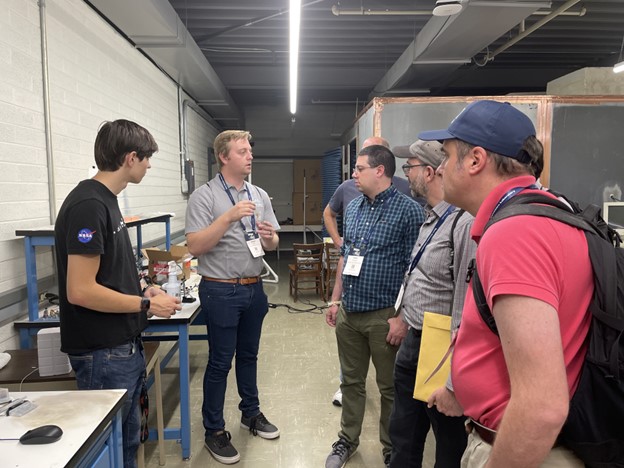
The GASRATS mission will test transparent antenna technology never before used in space. Learn more about the satellite antenna fabrication process through a tour of the campus microwave antennas laboratory.
Once GASRATS is in orbit, the mission operations team will utilize the GAS Team ground station to track, command, and receive signals from the satellite. Learn more about the radio communications process and receive a tour of the GAS Team ground station control room. IMPORTANT: If you want to participate in the mission operations demonstration, please install GNURadio and bring a song to transmit in a .wav file format.
Satellite Workshop Night 2
Tuesday, September 9, 4:30 PM, ENGR 106
This workshop will include brief hands-on demonstrations from the outreach team and flight software team. IMPORTANT: If you want to participate in the flight software workshop, please install Docker and install VS Code.
If you are interested in community engagement and our K-12 Bring Utah Students to Space payload, come learn more about the work being done for those projects. The GAS Team is also in need of students to manage our social media presence, as well as design artwork of the mission patch for the GASRATS satellite. Come discuss these projects with us.
The flight software is all written in F Prime, a proprietary software framework created by NASA Jet Propulsion Laboratory. Participate in a quick tutorial on how to use F Prime to interface with the GASRATS flight computer, a Raspberry Pi. IMPORTANT: If you want to participate in the flight software workshop, please install Docker and install VS Code.
Satellite Workshop Night 3
Wednesday, September 10, 4:30 PM, ENGR 304
This workshop will include brief hands-on demonstrations from the ADCS team, environmental testing team, and avionics team.
The Attitude Determination and Control System is how a satellite controls its orientation in orbit. The GASRATS mission will need to determine where it is in orbit, determine which direction it is facing, and reorient to point the transparent antenna at the ground station. Learn about the systems, algorithms, and technology used to control the satellite!
The environmental testing team is responsible for ensuring GASRATS will withstand the harsh space environment in orbit - vacuum, atomic oxygen, large temperature fluctuations. Join us for a tour of our lab and a quick vacuum chamber demonstration.
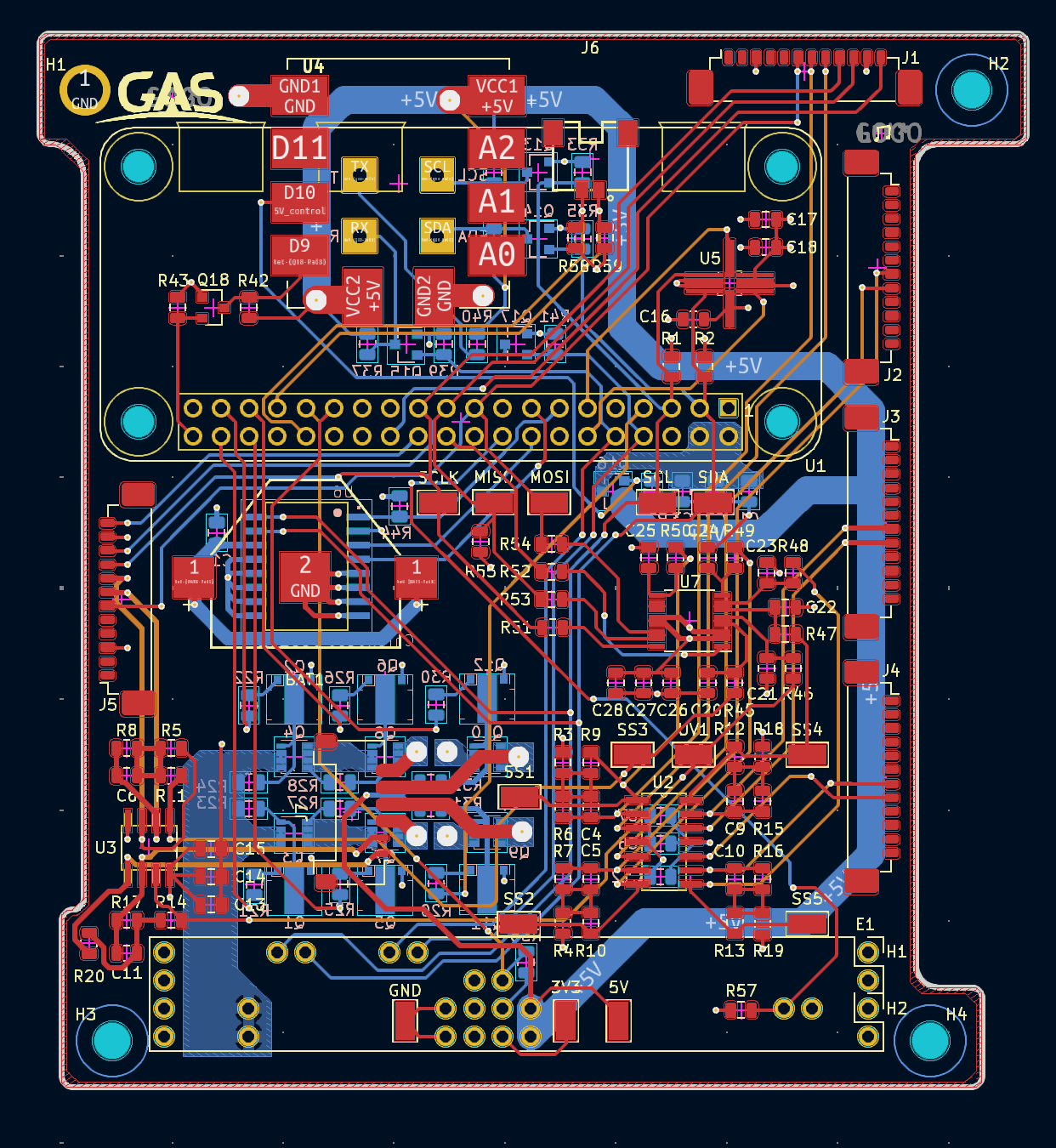
The avionics team is in charge of designing, assembling, and prototyping the electrical system for the GASRATS satellite. This includes manufacturing several custom printed circuit boards, and managing the power generation of the satellite. Learn how to apply electrical engineering skills to a practical real-world problem.

Why Join the GAS Team?
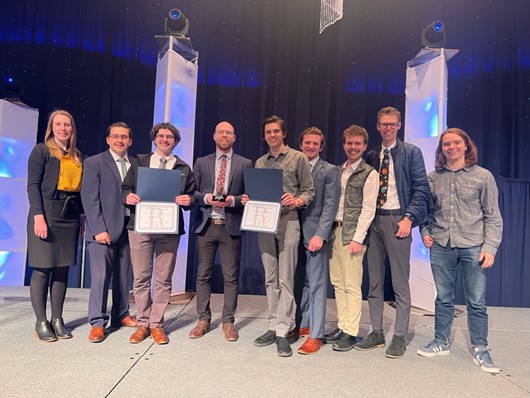
The GAS Team is an ideal way for an individual to get real-world experience as an undergraduate. The GAS Team models itself on a mix of aerospace engineering companies and university research labs, to provide its members with an authentic experience. This experience is invaluable for those looking to pursue a career in industry, academia, or higher education such as a master’s or PhD. Additionally, being on the GAS Team allows you the opportunity to send something you have worked on to space!
On the GAS Team, members get the opportunity to develop skills such as project management, teamwork, problem-solving, and communication along with technical engineering and business skills. The application of classroom knowledge is a great boost to a resume as is many of the technical conferences the team attends. Being on the GAS Team also allows students to build relationships with team connections and secure summer internships either with the GAS Team or elsewhere.
Who Can Join?
The GAS Team accepts volunteer team members from all majors at USU. Little experience is needed from freshmen and sophomores; however, the team asks that all juniors and seniors have some experience in whatever they are joining the team to do. This does not have to be satellite specific experience. The team does require a short application process.
Currently the GAS Team is particularly looking for individuals who have interest or experience in the following areas:
- Graphic design (design apparel and promotional materials)
- Video production (create videos for use in outreach/promotional material)
- Business development (secure funding and maintain a strong relationship with industry sponsors and university connections)
- Outreach (assist with the Bring Utah Students to Space program)
- Electrical engineering (design PCBs)
- Communications engineering (build a ground station for communicating with the satellite)
- Software engineering (write flight software)
Team Structure
If you join the GAS Team, you can join any of the following subteams working on sending a satellite to space!
The ADCS Team designs the attitude determination and control system for the satellite. This involves the development of software algorithms and commands along with the implementation of the software on its respective hardware. For GASRATS, the ADCS will be a novel design that uses only magnetorquers for 3-axis control.
The Avionics Team is responsible for the electronic systems of the satellite and ensures all components properly interface with each other. With many differing interfaces, it is critical to ensure power and data can be correctly transferred throughout the satellite. Avionics will also be responsible for designing and building a complex PCB to interface the Raspberry Pi onboard computer with the rest of the satellite components and sensors.
The Environmental Testing Team subjects the satellite to various simulated space conditions and stresses, such as vacuum, temperature extremes, and vibrations. This ensures that the satellite can withstand the harsh environment of space and continue to function properly. For the GAS Team the two main testing systems will be thermal vacuum (TVAC) and vibration. The environmental testing team will be responsible for building a TVAC chamber as well as performing TVAC and vibration testing.
The Flight Software Team develops the software that controls and manages the satellite's operations. They design the software architecture, implement command and telemetry processing, and ensure that the software interfaces seamlessly with hardware components. GASRATS will be utilizing the F' (F Prime) flight software framework developed by NASA Jet Propulsion Laboratory (JPL). The GAS Team is working directly with JPL engineers to adapt and expand F' for use on GASRATS.
The MOPS Team coordinates with various radio frequency groups to ensure GASRATS is able to transmit and receive at the correct frequencies. MOPS is also responsible for the construction, maintenance, and operation of two separate ground stations: one at UHF frequency and one at S-band frequency. MOPS will be in charge of communicating with GASRATS using the ground stations once the satellite is in orbit.
The Outreach Team focuses on engaging the public, educational institutions, and the broader community in the GASRATS project. They organize events, workshops, educational programs, and social media campaigns to raise awareness about space exploration, technology, and STEM education. The primary duties of the Outreach team will be to carry out the Bring Utah Students to Space (BUSS) Program.
The Payload Team is responsible for designing and manufacturing the transparent patch antenna (TPA) payload on GASRATS. The payload team will also take responsibility for the design and manufacture of the camera deployment system used to image the TPA while in orbit. Integration of both these systems with the rest of the satellite will also be the responsibility of the Payload Team.