
Why Sponsor Us?
Sponsors are the cornerstone of the GAS Team's sustainability and success. The GAS Team's mission has always been to give students the unique opportunity to perform extroadinary research in space. Thanks to sponsor contributions, more than 1,000 USU students since 1976 have had that opportunity and gained invaluable experience and knowledge while sending their experiment to space.
Today, our generous sponsors enable learning through small satellites called CubeSats. The GAS Team's undergraduate students assume full responsibility of the projects, learning how to successfully design, build, test, and launch a satellite. The team's 2022 CubeSat, GASPACS, was even the first satellite to be built completely by undergraduates!
Sponsors' contributions go directly to purchasing satellite components and hardware. Furthermore, sponsors help fund the GAS Team's summer fellowship research program, which allows students to continue developing the satellite over the summer. Beyond funding, sponsors instill commitment and purpose, fueling the team's shared passion and drive to put their name in space. This inspiration catalyzes growth, teamwork, and enduring dedication. As GAS Team members graduate, they carry these experiences that will drive lasting advancements in their careers, all thanks to our sponsors.
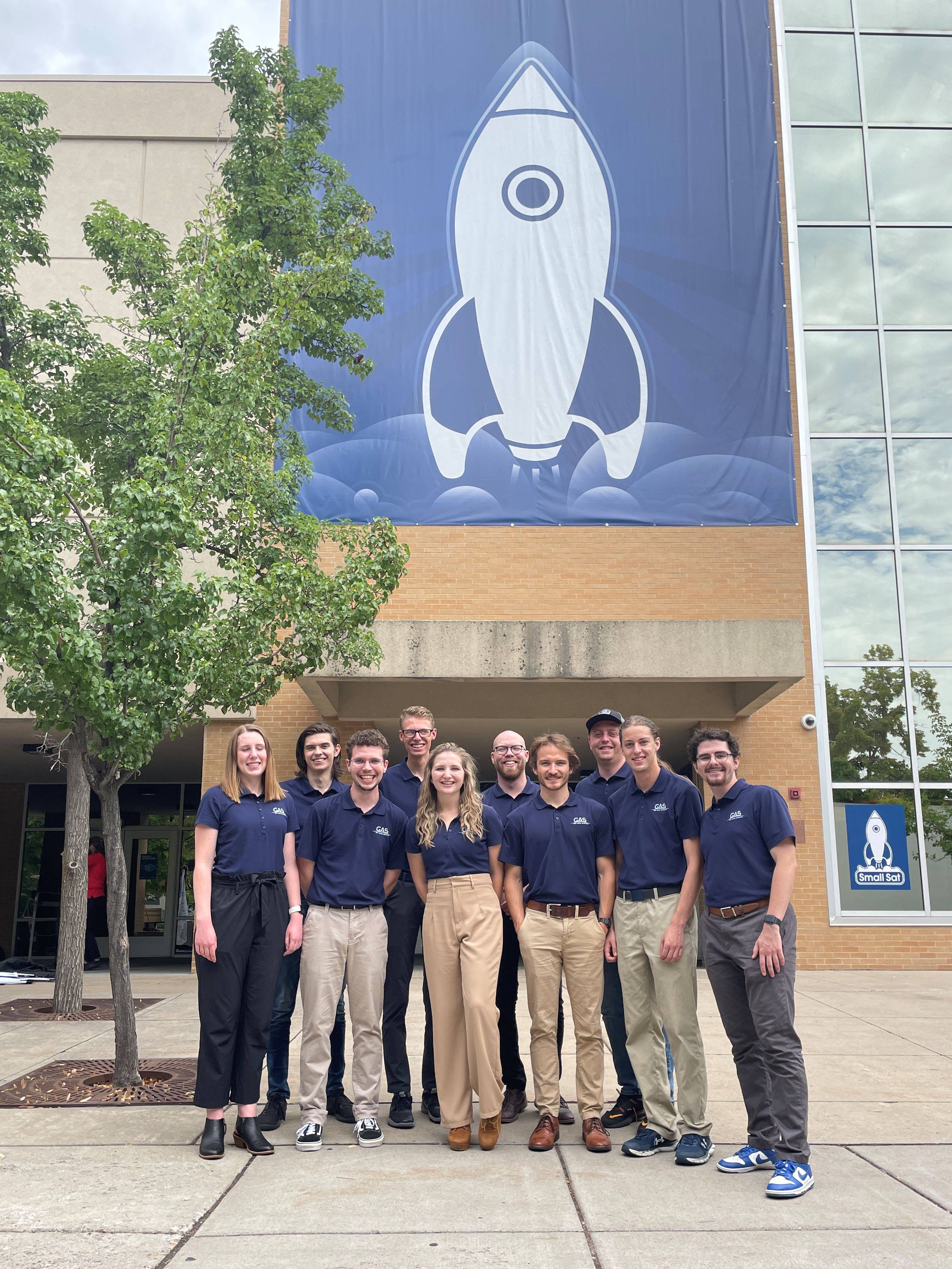
Sponsorship Benefits
In addition, to the benefits provided to the team, becoming a GAS Team sponsor entails several benefits for the sponsor. As a volunteer student team at Utah State University, the GAS Team is a 501(c)(3) non-profit tax-exempt organization. In exchange for sponsorship, the team can offer the following giving-level benefits:
- LEO | Up to $4,999: Logo/name on merchandise, on display at technical conferences, on website, social media posts; access to team resumes
- MEO | $5,000 - $19,999: All LEO benefits, plus logo/name on Pelican transport case and priority logo placement
- GEO | $20,000 - $49,999: All MEO benefits, plus logo/name engraved on satellite, use of satellite imagery, and an invite to meet the team, see the labs, and view the satellite before delivery
- Lagrange | $50,000 and above: All GEO benefits, plus verbal recognition at technical conferences and satellite replica (the fair market value of the satellite replica, up to $50.00, will be indicated on the charitable donation receipt)
Please note that all sponsor logo/name usage on Utah State University items and materials, in digital assets and at events must have an accompanying “Sponsored By” statement included.
How to Become a Sponsor
If this sponsorship opportunity interests you, we would love to discuss further details of the project, and the next steps for this sponsorship. To donate you can either go to the donate page or email us at sponsors@gas.usu.edu to let us know when we can contact you. Thank you for your time, and we look forward to hearing from you!
Current Sponsors
Thank you to our current sponsors who are helping make the GASRATS project possible!
GEO Sponsors

Anonymous GAS Alumni
Alumni have always been a crucial part to the GAS Team, providing funds and guidance throughout the course of projects. The USU GAS Team has over 40 years of alumni that the team is incredibly proud of.
MEO Sponsors

L3Harris
L3Harris is a leading American company specializing in defense, communication, aerospace, and technology solutions. Formed through the merger of L3 Technologies and Harris Corporation, the company offers advanced products and services in areas like communication systems, sensors, electronic warfare, and space technology.

ARDC
Amateur Radio Digital Communications was generous enough to sponsor the funding of the GAS Team's S-band Ground Station. This station is active on SatNOGS, allowing the amateur radio community to access satellite communications on S-band frequencies. ARDC also funded the GAS Team's portable ground station, an outreach project that gives Utah students a real-life example of how satellite communications work.
ARDS's generous funds additionally contributed to the GASRATS CubeSat on-board communications system. The antenna technology demonstrated by GASRATS may be instrumental to satellite communication in the decades to come.