
English Undergraduate Conducts Hands-on Research in South Carolina
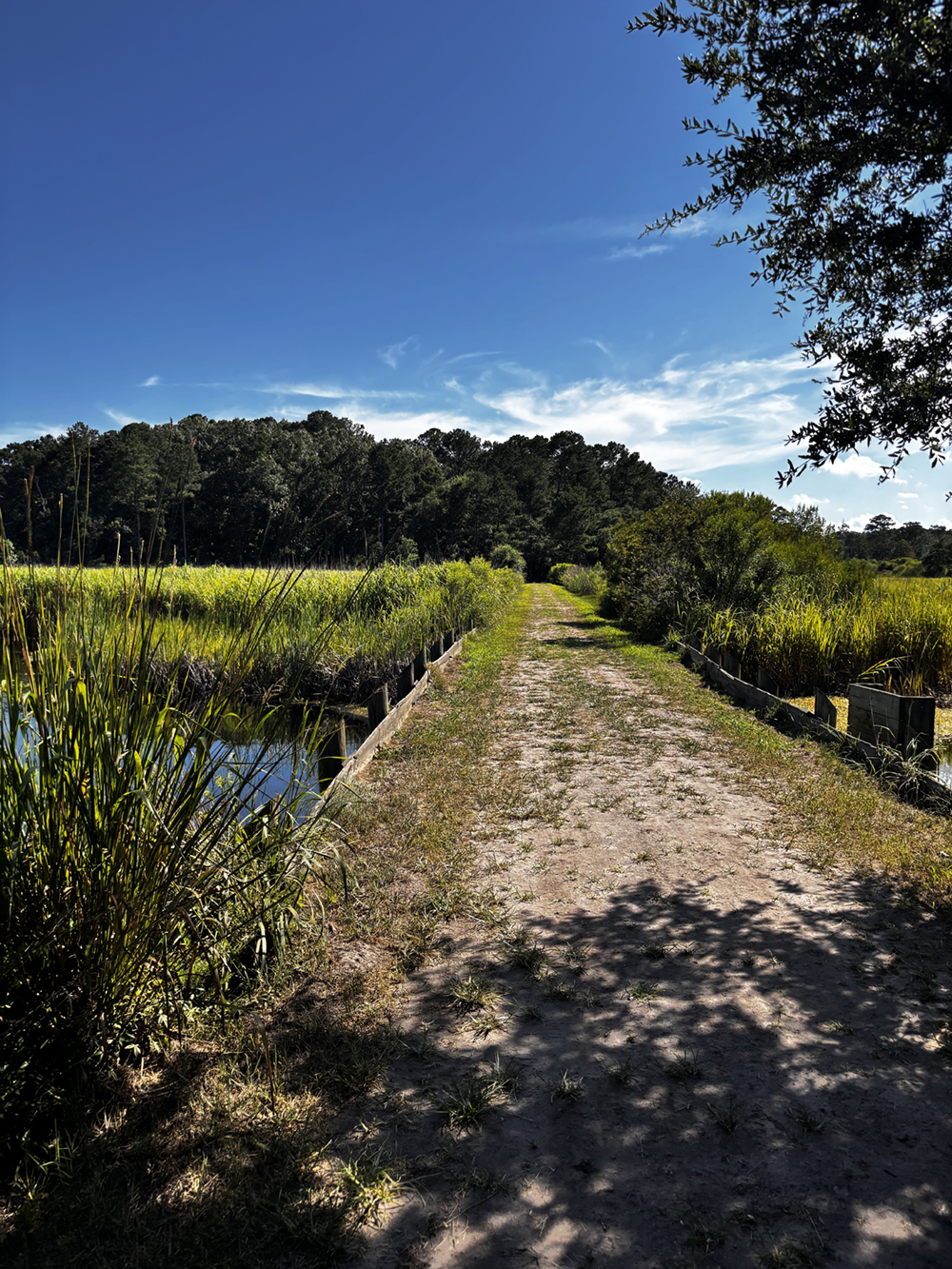
This summer, English literature undergraduate student Yasamin Osqueezadeh went on a research trip to South Carolina with Assistant Professor Adena Rivera-Dunda. They focused on the history of enslavement and how it is talked about today.
“Going into this project, my original plan was to analyze the different forms of communication between enslaved, freed, and escaped Africans/African Americans,” Yasamin reflects. This idea was influenced by the reading of Beloved by Toni Morrison in her ENGL 4310: American Writers class with Adena. “Adena and I thought that African American museums and plantations may hold crucial information on how communication occurred between these different groups. However, my research question changed as soon as I stepped onto the first for-profit plantation: Boone Hall.”
In addition to Boone Hall, Yasamin and Adena visited three other for-profit plantations: Middleton Place, Drayton Hall, and Magnolia Plantation, which have become tourist attractions. “They have altered the grounds to create an ‘aesthetic’ area meant for pictures, fine dining, and a romantic look into the lives of those who hold white colonial wealth,” Yasamin comments. “Each plantation had high entry rates and had little focus on the history of the plantation. Little was told about those enslaved on the plantation. Thus, the enslaved individuals who had once lived and died on those plantations are still being exploited. To fight against racism is to fight against any and all efforts to minimize the horrid history of the United States.”
From this experience, Yasamin’s research question shifted to looking at how differently African American history was presented in for-profit plantations compared to state and national parks —and how current administration aids in the destruction of education and preservation.
Yasamin and Adena visited the International African American Museum to get a correct education on the history of slavery. “I took notes on what stood out and the basic history of slavery in South Carolina,” Yasamin says. “When visiting state and national parks, I took note of the type of language used when relaying history. Although the history was more accurate than at the for-profit plantations, most of the parks used light, child-like language, and often painted the plantation owners in a softer light.”
In her research, Yasamin found this could be for a multitude of reasons, including the laws put forth by the current administration, which has parks put QR codes on display that urge visitors to report anything that “paints America in a bad light.”
“Currently, the administration has also set their sights on museums — what this attack on history entails is still unknown,” Yasamin explains. “Thus, it’s important to preserve as much information as possible while criticizing the current plantation owners’ and administration’s attempts to further whitewash history.”
Yasamin hopes to present her findings at USU’s Student Research Symposium and work toward publishing an article with Adena. She said this experience, alongside her other efforts in undergraduate research throughout her time at USU, have been influential in her academic career. “I value undergraduate research because it allows students to develop proper research skills outside of a traditional classroom, engage with their community, and conduct research in subjects that truly interest them,” Yasamin reflects. “In addition to that, it helps prepare students for graduate school and allows them to create a solid CV.”