
USU History Faculty Release New Works on Indigenous Labor and Buddhist Biography
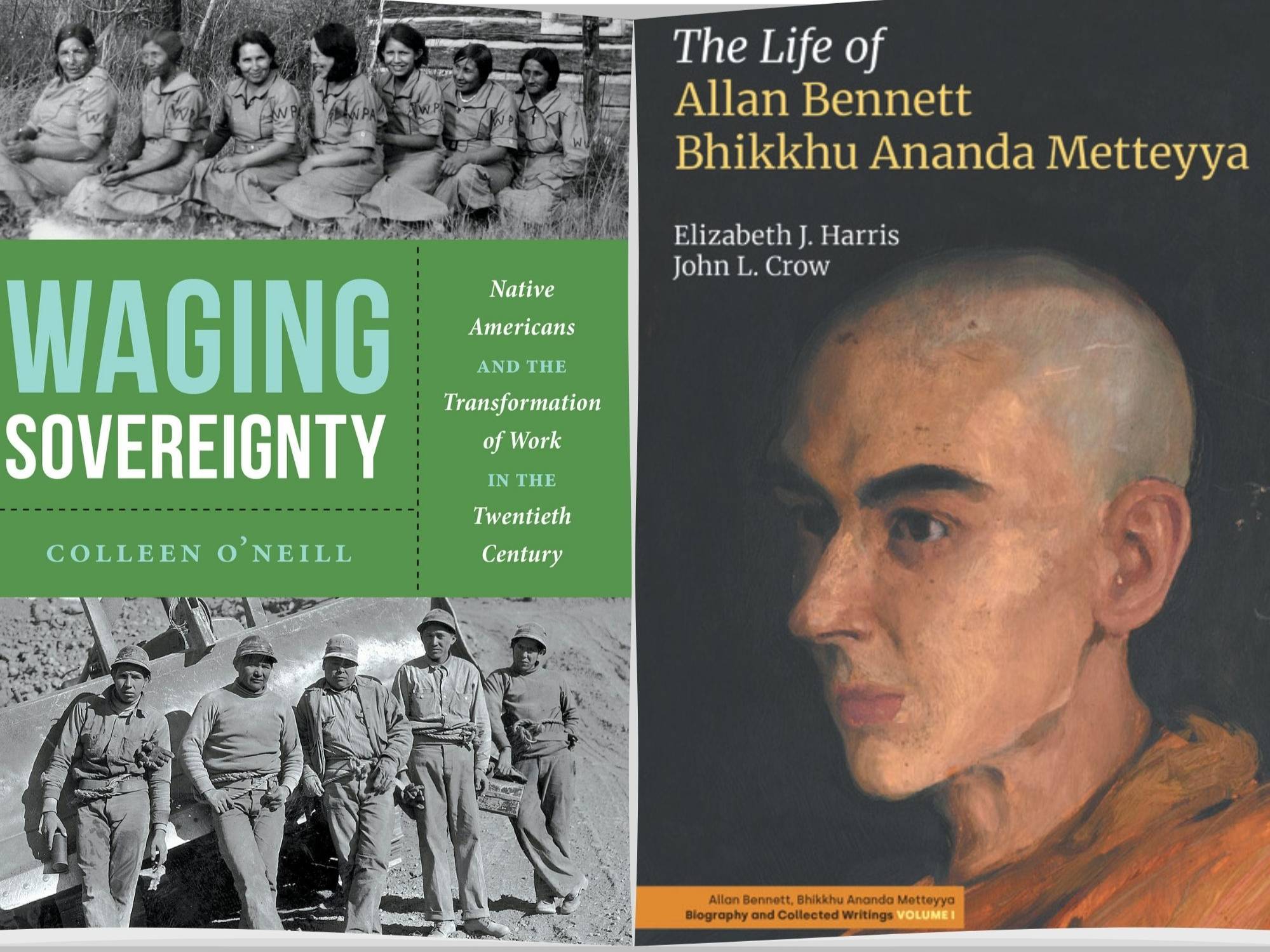
New works by USU historians focus on Native sovereignty and Buddhist history
History faculty at Utah State University have published two new books exploring Native sovereignty and the global development of Buddhism.
Colleen O’Neill, associate professor of history, released “Waging Sovereignty: Native Americans and the Transformation of Work in the Twentieth Century,” a study of Native workers’ rights and their connection to tribal sovereignty. Drawing on federal archives, Native memoirs, oral histories and field research, O’Neill traces the impact of federal labor policies from the era of boarding schools to contemporary gaming enterprises. The book examines how policymakers sought to reshape Native lives through wage work, including relocating families to cities and placing children in agricultural and domestic labor, and how Native workers resisted assimilation, rebuilt their communities and expanded the meaning of sovereignty through workplace activism.
John Crow, adjunct professor of Religious Studies, published “The Life of Allan Bennett, Bhikkhu Ananda Metteyya,” the first full biography of one of the earliest British men to receive higher ordination as a Buddhist monk, co-authored with Elizabeth J. Harris. The book chronicles Bennett’s early rejection of Christianity and involvement in occult and esoteric movements, including Theosophy and the Hermetic Order of the Golden Dawn, before his conversion to Buddhism in the early 20th century. After traveling to Ceylon, now Sri Lanka, for health reasons, Bennett was ordained in Burma, now Myanmar, in 1902. From there, he built an international Buddhist network, founded the International Buddhist Society and launched the journal “Buddhism – An Illustrated Quarterly Review.” Crow’s work also addresses the controversies surrounding Bennett’s life, particularly his early ties to Western occultism.