
Emily White - 2021
Artist's Statement
Discussions about combating climate change should not be political, but usually they are. It's astounding to know how many people refuse to take accountability for their actions and how they’ve affected life on this planet. This project is my way of combating all the politics involved in this push towards sustainability and compassion for life on this planet. Innocent lives are being lost because of humanities lazy and selfish actions. Habitats are being destroyed to make more room for palm oil plantations and factories. All life should be valued like human life is valued. I believe that it is possible for us to come together and begin to heal what has been hurt once we recognize the value of all life.
Each of these poems are inspired by animals who are critically endangered and very closeto extinction.
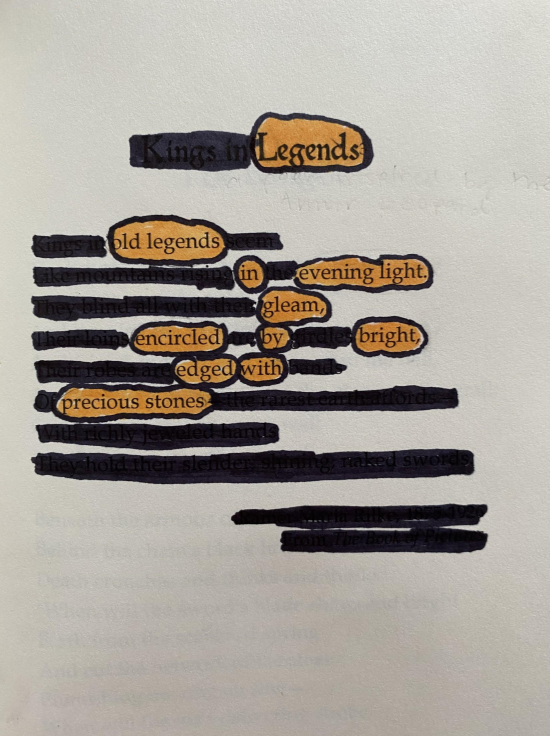
This poem was inspired by the Amur Leopard. There are only 70 wild amur leopards left in the world. These nimble-footed predators can run up to 37 miles per hour and leap more than 19 feet horizontally and up 10 vertical feet. They are covered in uneven spots over a beautiful, thick, golden coat. They are almost sure to go extinct because of deforestation and poaching.
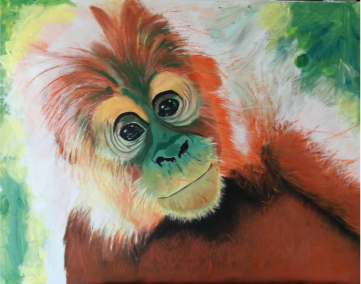
Man of the forest
Orangutan’s are considered to be
the resident “man of the forest”
with their leathered hands and feet, and fluffy orange hair,
picking wild figs and mangosteens from the tallest trees.
Their inquisitive eyes search trees for
Relatives and friends,
made more alive by the sun's light through
dark green leaves above their heads.
After thorough searching, they find each other and
the young orangutan play together, swinging from trees with their
hairy arms, while their hand-like feet hold tight to fruit
preparing to hurl it at their siblings.
A fig fight has begun, purple’s and pinks stain
the tangled orangutan’s fur. Their hoots and hollers
can be heard from far beneath the lush
green trees that are rapidly thinning.
The real men come through the forest,
slowly destroying the parameter as
the palm oil plantation outside
the orangutan habitat and home.
A (silent) growl
By: Emily White
His determined gaze is unwavering,
rusty ginger hair settled evenly down the slope
of his perfect triangular nose.
There’s a majesty
when a noble creature like this enters the atmosphere.
He thrives in the Sumatra Forests,
where the humid ocean mist hoovers over the trees like a fog.
Under clouds of humidity, the Sundra Tiger’s home is
Chopped, destroyed and slaughtered by man.
The last four hundred Tigers
watch through yellow eyes and contracted pupils.
A deep growl joins the humid fog above
the island forest, getting quieter and quieter by the day.
A Mothers Tale
The sun beats down on the white sand beach,
awaiting a stunning sea turtle. She emerges from the salty carribean water,
spotted flippers cutting through the uneven terrain.
Hot grains kept the soon to be mamma hawksbill turtle warm as
she crawled slowly up beach until she reached a quiet,
shaded patch of sand.
The frantic mother uses her back flippers to hollow out the sand,
creating a soft nest to lay her eggs in. After several hours of
difficult labor, the hawksbill turtles eggs are safe under the warm sand.
The hawksbill mother gazes at the sand
that cradles her hundred eggs, longing to know which of them
will come back to her, and which of them won’t.
A month later, her textured flippers float in dark caribbean
waters that were once clear. Now, as sunlight peeks
through the salty water, her big black eyes find plastic
bottles and bags at every angle. They are forign, unfamiliar, misplaced.
Shiny bottles and translucent plastics are hard to avoid,
but she does her best.
Plastic bags sink down into the dark open like sad parachutes,
sometimes catching fish as they innocently float.
Other times the bags are inhaled, suffocating the life that belongs
there, in the sea. Bottles glisten as the sunlight shines through them,
mystifying and terrifying all at once.
A sharp pain in her jaw awakens her from the plastic trance. A long,
sharp hook lodges in her cheek, pushing deeper and deeper
through her tough leathery skin, dragging her up to the fishing ship
overhead. The men pull her onboard and realize their mistake.
Blood pours from her mouth as the men tear her skin to remove the jagged hook.
They throw her back in like nothing happened.
The water is foggy through her eyes now. She shakes her head back and forth
trying to relieve the searing pain in her mouth. A wound like that
is hard to shake. One hook, that’s all it took to orphan a hundred
baby turtles before they made the triumphant
swim for shore. They were motherless before they hatched.