
Lily Petersen - 2024
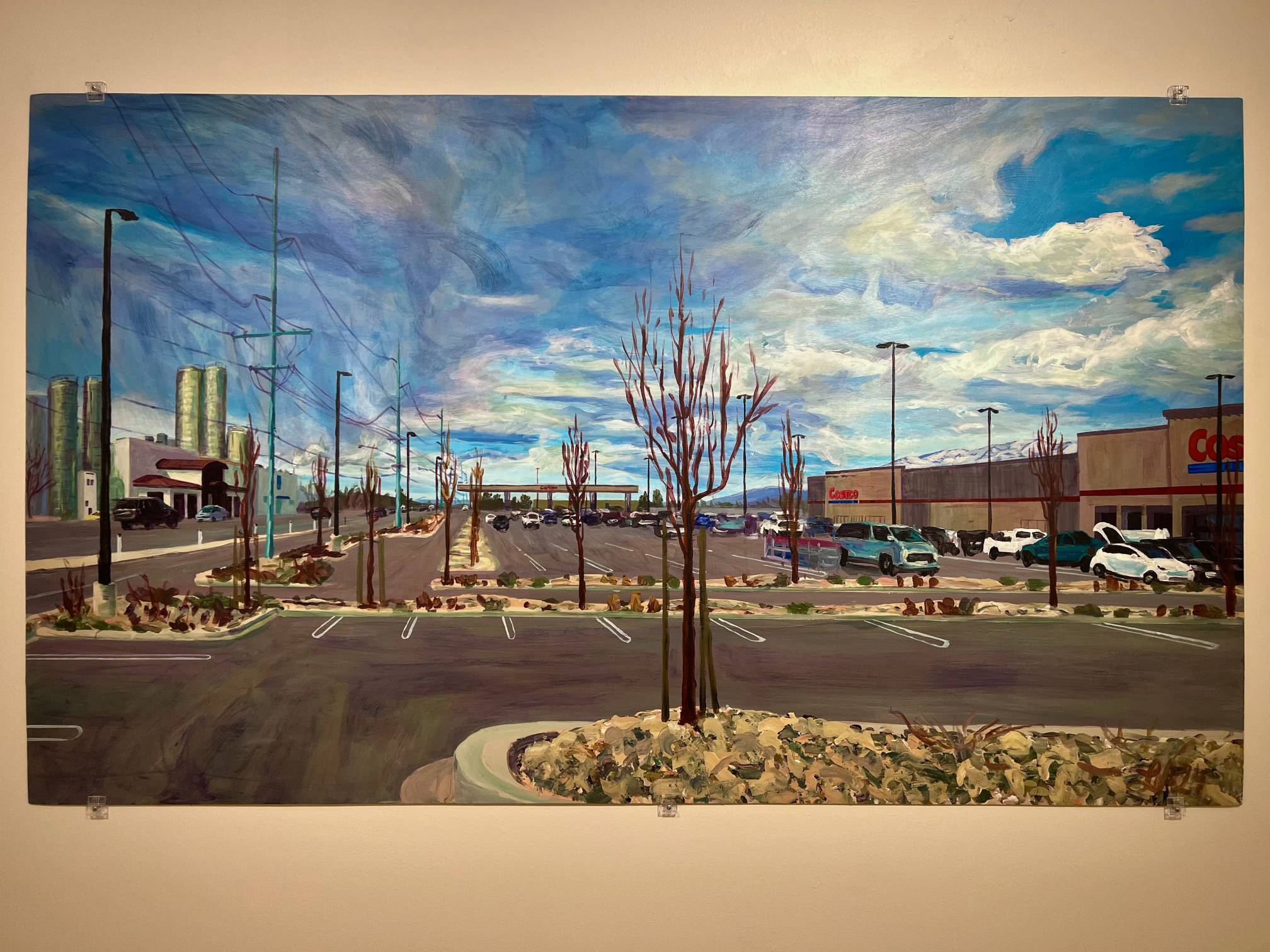
"Wholesale Elegy" or "Paved Paradise"
Artist's Statement
As a devoted landscape painter who seeks to bring representational art making into modernity, I acutely examine human effect on landscape and the multiplicity of reaching between man-made establishments and nature. Enticed by the interaction between buildings, fences, foliage, lines of communication, and the open road, the literal and implied connections of these motifs in my work convey a sense of Americana and environmental disruption. I’m fascinated and bothered at how telephone poles reflect a Christian cross, and how they line streets as symbols of colonization, communication, and deforestation. My focus on domesticated land brings my work into the current conversation on infrastructure, climate change, and physical socioeconomic barriers. Spending the last 5 years in Utah, I’ve witnessed how the state puts little value on open undomesticated space.
Using large brushes, cups of paint, and my bare hands, I made this work in several sessions of painting in the Logan, UT Costco parking lot with efficiency and attention to detail. With the spirited animation only observational painting can bring, this work embodies my ideals as an artist. Flowing gesture, diverse mark making, and representations of industrialized space are woven together in this piece.
By specifically painting Cache Valley’s Gossner Factory and the local Costco which face each other, I chose to highlight the United States’ over consumption of food on a massive scale at all costs. With the mountains receding in the background of this plein air painting and the viewer’s focus on the parking lot and mass of cars, I hope to encourage the viewer to feel uneasy and fascinated by the manufactured wasteland that is now made common in our society. The distant mountains are all that remains of the desert that’s now used to mass distribute food. Only the untamed sky above with the oncoming storm holds its own space in full. The rigid trees further convey the confinement of natural land for the sake of consumption. This painting is proof of a death between man’s connection to their place in the natural order.