
Chemistry & Biochemistry Seminars | Fall 2026 & Spring 2027
USU's Department of Chemistry and Biochemistry presents a weekly seminar series to give students and faculty the opportunity to learn about cutting-edge research in the field. Seminars are held on Wednesdays at 4:00 p.m. (Mountain Time) in ESLC 046, unless otherwise stated.
Wednesday, September 9
Chemistry & Biochemistry Undergraduate Welcome Event
Wednesday, September 16
Mechanisms of Immune Protection Against Alzheimer's Disease with David Hansen
Wednesday, September 30
A PhD, Three Countries, and a Career I Built One Choice at a Time with Elena Minones-Moyano
Wednesday, October 7
Leveraging AlphaFold and 14-3-3 Protoeomics to Discover Functional PTMs and Mechanisms of Cell Signaling with Joshua Andersen
Wednesday, October 14
Amorphous Intermediates Direct Polymorph Selection During Crystallization with Rodrigo Noriega
Wednesday, October 21
The Cause for Concern is Real: Legacy PFAS Effects on Biomembrane and Protein Structure with Robert Walker
Wednesday, November 4
Organic Semiconductors from Emerging Technologies with Thuc-Quyen Nguyen
Wednesday, November 11
Multi-Systemic Phenotypical, Metabolic and Transcriptional Changes Induced by Chronic NAD Deficiency in ANDY Mice with Mirella Meyer-Ficca
Wednesday, November 18
CHEM4890/4990 Poster Session
Wednesday, December 2
CHEM4890/4990 Presentations
Wednesday, December 9
CHEM4890/4990 Presentations
Wednesday, February 24
TBA with Craig Mosman
Wednesday, March 3
Departmental Laboratory Safety Refresher Training
Wednesday, March 17
TBA with David Shultz
Wednesday, April 7
TBA with Jahan Dawlaty
Wednesday, April 14
CHEM4890/4990 Presentations
Wednesday, April 21
CHEM4890/4990 Presentations
General Seminar Information
Day: Wednesdays
Time: 4 - 5 pm (MT)
Location: ESLC 046*
*Unless otherwise noted for the event.
Available Seminar Dates
- October 28, 2026
- January 20, 2027
- January 27, 2027
- February 3, 2027
- February 10, 2027
- February 17, 2027
- March 24, 2027
Mechanisms of Immune Protection Against Alzheimer's Disease
Wednesday, September 16
David Hansen
Brigham Young University
David Hansen completed his bachelor's degree in Molecular Biology at BYU (2000), his doctoral degree in Cancer Biology at Stanford Medical School (2006), and his postdoctoral training in neural stem cell biology at UC San Francisco (2011). From 2011–2020, he worked in the Neuroscience Department at Genentech, Inc., as a project team leader in research and drug development to understand and manipulate the activities of glial and immune cells in neurodegenerative diseases including Alzheimer's disease (AD). Since 2020, Dr. Hansen has worked as an Associate Professor in BYU's Chemistry & Biochemistry department, establishing his academic research program to characterize the molecular and cellular functions of AD risk genes expressed by microglia, the brain's resident immune cells. Understanding how these microglia-expressed AD risk genes influence microglial cell biology to impact AD pathogenesis will identify new therapeutic approaches to treat or prevent AD.
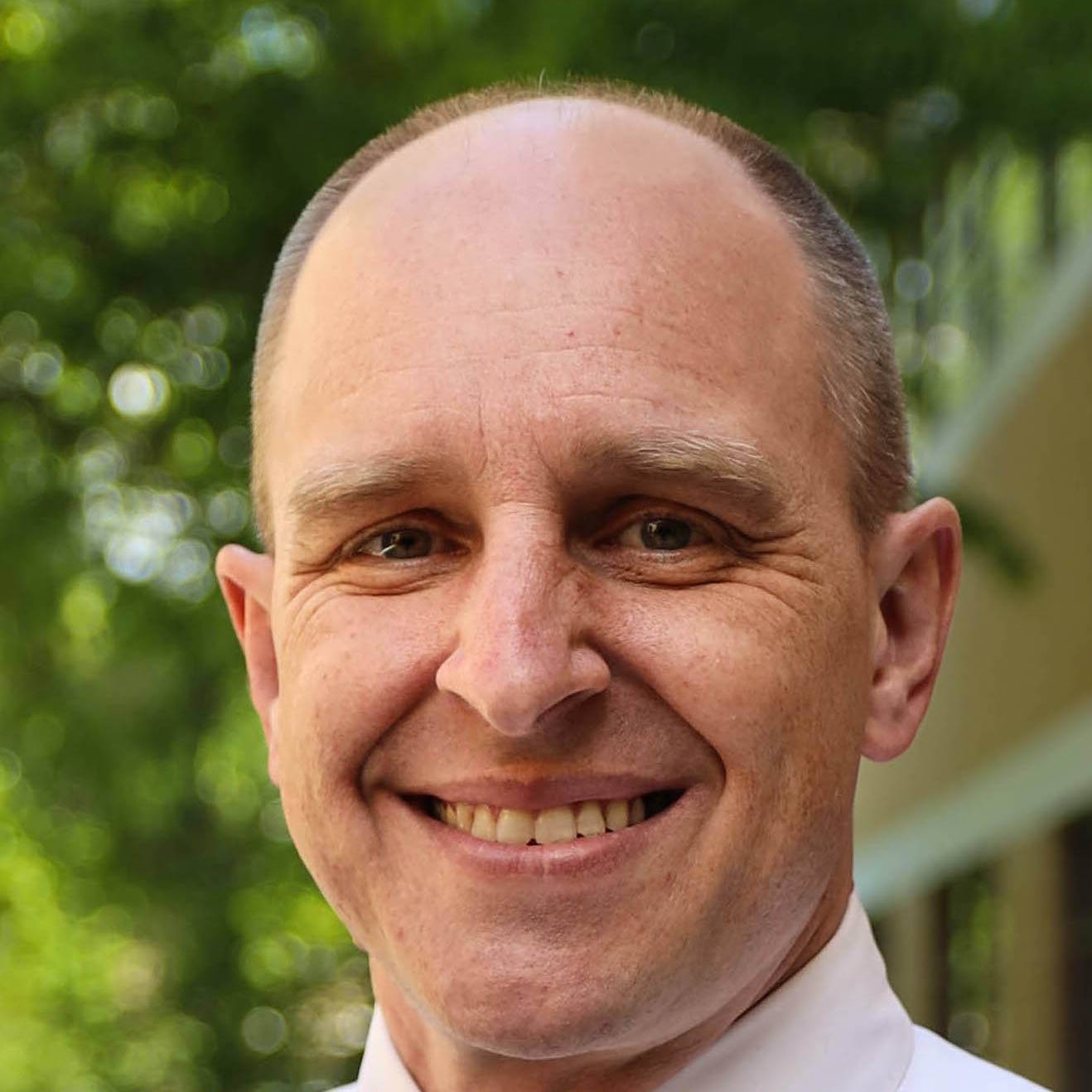
A PhD, Three Countries, and a Career I Built One Choice at a Time
Wednesday, September 30 | Virtual Event via Zoom, Register for Link
Elena Minones-Moyano
Where do you want to be ten years from now? It's a fair question and a nearly impossible one, because the only career most of us have watched up close is academia. It's hard to know whether you'd enjoy a job you didn´t even know it existed. Elena Minones-Moyano, PhD, never had a long-term plan, just a rule: keep choosing more of the work she enjoyed and less of the work she didn't. She'll trace the path that took her from Parkinson's research in Barcelona and Edinburgh to leading product strategy at Addgene, one choice at a time, and what each choice taught her. Along the way, she'll cover how to test a career direction before committing to it, and which parts of a PhD transfer directly to industry.

Leveraging AlphaFold and 14-3-3 Protoeomics to Discover Functional PTMs and Mechanisms of Cell Signaling
Wednesday, October 7
Joshua Andersen
University of Utah
Josh Andersen received his Ph.D. in Virology from the University of Utah in 2006 and completed postdoctoral training in cancer cell signaling and biochemistry at Duke University. After joining Duke faculty as an Assistant Professor in 2011, he moved his laboratory to BYU and the Wasatch mountains in 2013 before joining the Huntsman Cancer Institute (HCI) and the University of Utah in 2023 where he is currently a Professor of Oncological Sciences. His research at HCI combines computational biology, structural prediction, proteomics, and molecular approaches to identify functional post-translational modifications that regulate cell signaling. By integrating AlphaFold-based prediction with experimental validation, his laboratory uncovers new mechanisms of protein regulation with implications for cancer biology and therapeutic discovery.. When out of the lab, he enjoys mountain biking, skiing, writing music, and spending time with his family.

Amorphous Intermediates Direct Polymorph Selection During Crystallization
Wednesday, October 14
Rodrigo Noriega
University of Utah
Rodrigo Noriega traces his interest in optics to his bachelor's degree in Engineering Physics at Monterrey Tech (2006), his fascination with structure-function properties in soft matter to his Ph.D. in Applied Physics at Stanford University (2013), and his love of ultrafast spectroscopy to his postdoc days at UC Berkeley (2016). In 2016, he joined the Chemistry faculty at the University of Utah, where he and his group study how molecular-scale dynamic processes control charge transfer and self-assembly. Because most functional materials operate in the condensed phase, one of their goals is to tailor molecular environments in order to tune their properties.

The Cause for Concern is Real: Legacy PFAS Effects on Biomembrane and Protein Structure
Wednesday, October 21
Robert Walker
Montana State University
Dr. Rob Walker is a College of Letters and Science Distinguished Professor and the Department Head in Montana State’s Chemistry and Biochemistry Department. He also serves as the Montana University System project director for the statewide NSF EPSCoR Track 1 project, SMART FIRES, focused on the dynamics of prescribed fire and prescribed fire’s impact on Montanans and Montana communities. Dr. Walker earned a B.A. in Chemistry from Dartmouth College and a PhD in Chemistry from the University of Wisconsin–Madison. After postdoctoral work at the University of Oregon, he joined the faculty at the University of Maryland, College Park in 1998. Dr. Walker moved to Montana State in 2009 where his research program continues to study chemical structure and reactivity at interfaces and other difficult-to-access environments. In 2013, Dr. Walker helped create the Montana Materials Science Graduate Program, a collaborative effort involving MSU, Montana Tech, and the University of Montana. Dr. Walker has published more than 140 scientific papers and has successfully mentored more than 35 Ph.D. students. His work has been recognized with an NSF CAREER award, a Sloan Foundation fellowship, an Institute of Advanced Study fellowship at Durham University in the UK, and, more recently, an Otto Mønsted visiting faculty fellowship awarded by the Danish Science Foundation. He was named a AAAS Fellow in 2012.

Organic Semiconductors for Emerging Technologies
Wednesday, November 4
Thuc-Quyen Nguyen
University of California, Santa Barbara
Thuc-Quyen Nguyen is the Director of the Center for Polymers and Organic Solids, Distinguished Professor in the Department of Chemistry & Biochemistry, and E. Khashoggi Industries Chair in Material Chemistry at the University of California, Santa Barbara. Nguyen received her Ph.D. (2001) degree in Physical Chemistry from the University of California, Los Angeles under the guidance of Professor Benjamin Schwartz. From 2001-2004, she was a postdoc in the Department of Chemistry and the Nanocenter at Columbia University working with 2023 Chemistry Nobel Laureate Louis Brus and Professor Colin Nuckolls on molecular self-assembly. She also spent time at IBM Research Center at T. J. Watson (Yorktown Heights, NY) working with Richard Martel and Phaedon Avouris on molecular electronics. She joined the faculty of the Chemistry and Biochemistry Department at UCSB in 2004. Recognition for her research includes Office of Naval Research Young Investigator Award, National Science Foundation CAREER Award, Camille Dreyfus Teacher Scholar Award, Alfred Sloan Research Fellows, National Science Foundation American Competitiveness and Innovation Fellows, Alexander von Humboldt Senior Research Award, Fellow of the Royal Society of Chemistry, Hall of Fame - Advanced Materials, Beaufort Visiting Scholar, St John's College (Cambridge University), 2015-2019 World's Most Influential Scientific Minds; Top 1% Highly Cited Researchers in Materials Science by Thomson Reuters and Clarivate Analytics, Fellow of the American Association for the Advancement of Science (AAAS), Wilhelm Exner Medal from Austria, de Gennes Prize in Materials Chemistry from the Royal Society of Chemistry, Suffrage Science Award, French National Centre for Scientific Research (CNRS) Ambassador in Chemical Sciences, Henry H. Storch Award in Energy Chemistry from the American Chemical Society,Fellow of the United States National Academy of Inventors, Fellow of the European Academy of Sciences, and Elected Member of the United States National Academy of Engineering.

Multi-Systemic Phenotypical, Metabolic and Transcriptional Changes Induced by Chronic NAD Deficiency in ANDY Mice
Wednesday, November 11
Mirella Meyer-Ficca
Utah State University
Dr. Mirella L. Meyer-Ficca received her German Diploma in Biology (equivalent to an M.S.) from the University of Kaiserslautern, specializing in genetics, human genetics, organic chemistry, and zoology. Subsequently, she received her Ph.D. at the Eberhard-Karls-University of Tübingen, Germany in Human Genetics and Virology. Following her doctoral studies, she completed postdoctoral training in cancer biology and toxicology at the University of Arizona (2002–2005) and served as a Senior Research Investigator in malereproductive biology and toxicology at the University of Pennsylvania (2005–2013).
In 2013, Dr. Meyer-Ficca joined the faculty at Utah State University, where she currently is an Associate Professor in the Department of Veterinary, Clinical and Life Sciences within the College of Veterinary Medicine. Her research program explores the intersection of nutrition, germline biology, epigenetics and aging. Currently, her laboratory investigates how factors such as toxicant exposure, aging, and the availability of dietary components, such as vitamin B3/niacin, alter an individual’s health, and further change the male germline epigenome and sperm quality, with direct implications for offspring health.

TBA
Wednesday, February 24
Craig Mosman
Nanokar
TBA
Wednesday, March 17
David Shultz
North Carolina State University
TBA
Wednesday, April 7
Jahan Dawlaty
University of South California