
Course Spotlight: The Farm in Literature and Culture

English 3630: The Farm in Literature and Culture is a DHA and CI course for all majors. The course examines how the farm is portrayed in forms of media and literature, as well as how it is culturally represented. Lecturers Rosa Thornley, Bonnie Moore, and Deanna Allred teach the course, and it is offered every semester, as the demand for the course has only increased.
The course was originally started by Professors Emeritus Evelyn Funda and Joyce Kinkead. Evelyn first taught something similar to the course in 2004 — a week-long seminar called Agricultural Humanities: How Art and Literature Portray Farming in the 1930s. The first semester-long course she taught on the subject for undergraduates and graduate students was in 2008, and it was called Lit and Culture of the American Farm. Evelyn and Joyce then collaborated with Associate Professor Lynne McNeill on the book FARM: A Multimodal Reader.
“As one of the nation’s land-grant universities, Utah State University’s mission is to disseminate practical and innovative research to advance agriculture interests. Traditionally, that mission at Aggie schools has been the focus of science, engineering, and business units. But both Professor Kinkead and I believed that departments in the Humanities also have significant things to contribute to the conversation about agriculture,” Evelyn wrote in the blurb of the book. “To study agriculture in this interdisciplinary way is to see the bigger picture and recognize how the idea of “the farm” is reflected in our values, our politics, our art, as well as the ways we raise our children or write our histories.”
Rosa was brought into the process after the reader was compiled, and she developed and delivered the first Farm in Literature and Culture course. Bonnie started teaching the course a couple of semesters later, and Deanna began teaching the summer online seven-week course around five years ago. “Those summer online classes, and other online classes, just fill with people not just in the state but in different countries. It’s one of the more diverse classes in our department,” Deanna comments.
All three of the instructors have their students trace back through their ancestry to find their farming roots. Bonnie says, “Sometimes they look at me with these big eyes, like, ‘I won't be able to do that.’ But everybody's past goes back to agriculture. You might have to go further, but everybody's past goes there because our whole society, everything is built on it.”
For Rosa, seeing the students find their connection to farming is an exciting experience: “It seems like once they find that connection, they really engage with it and hold on to it.” The coursework varies between mode of delivery and professor, but students in the class might take a field trip to somewhere related to the farming industry, do blackout poetry, or create blogs or Instagram posts.
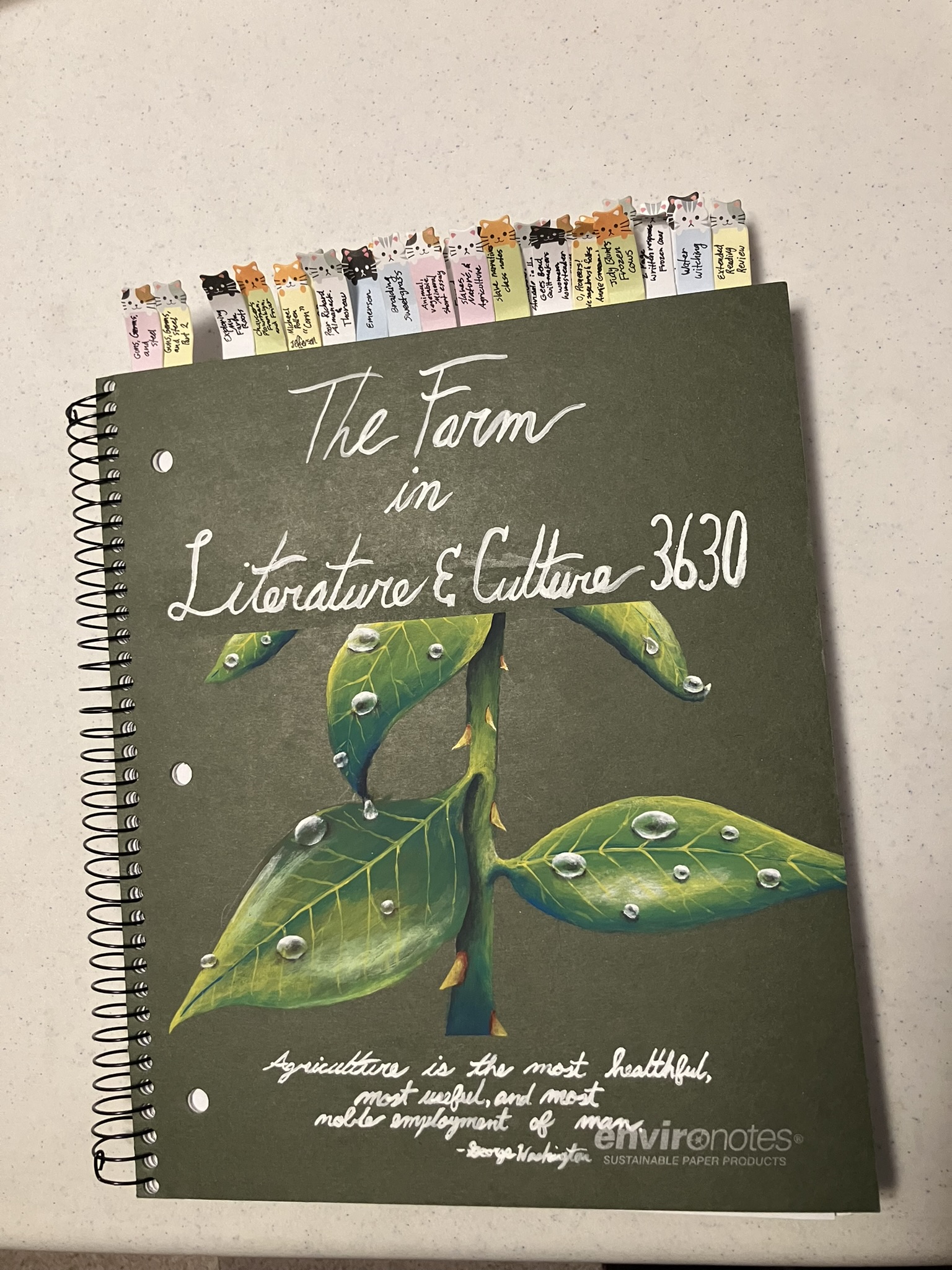
Students in the course create their own final project, and there has been a lot of diversity in it. One of Rosa’s past students created a bilingual children’s book about agriculture that she illustrated herself. Deanna had a student who grew a tomato plant on their balcony. One of Bonnie’s students did a field work research project on her family’s history of farming.
The course dives into different perspectives in farming, from enslaved stories to the female point of view to indigenous voices. “I think it gives them a new perspective, and they do get an opportunity to see the evolution of the farm instead of just the kind of work that they are doing now. And so it really gives them the depth of knowledge to understand where it started, and who sacrificed for it,” Rosa reflects.
While the course typically hosts many agriculture students, there are students from all disciplines who excel in the course each semester. “For an ag student, it gives them a voice in a department where they may not always feel comfortable. It gives them a voice just to relate what they bring to the table to a lit class that really does promote their way of thinking and their knowledge. But we all have knowledge in different areas, and it's nice that I get to teach this multimodal, very diverse class with so many different ways of knowing,” Deanna says.
Bonnie remarks that one of the key takeaways students can expect from the course is to feel more gratitude toward the agricultural community. “Most people in our country don't think about agriculture at all,” she says. “But the value is to have more thought about where food comes from, what it takes to get it, and the incredible gamble that farming people take every single season.”