
English 5450 Students Showcase Multimodal Projects
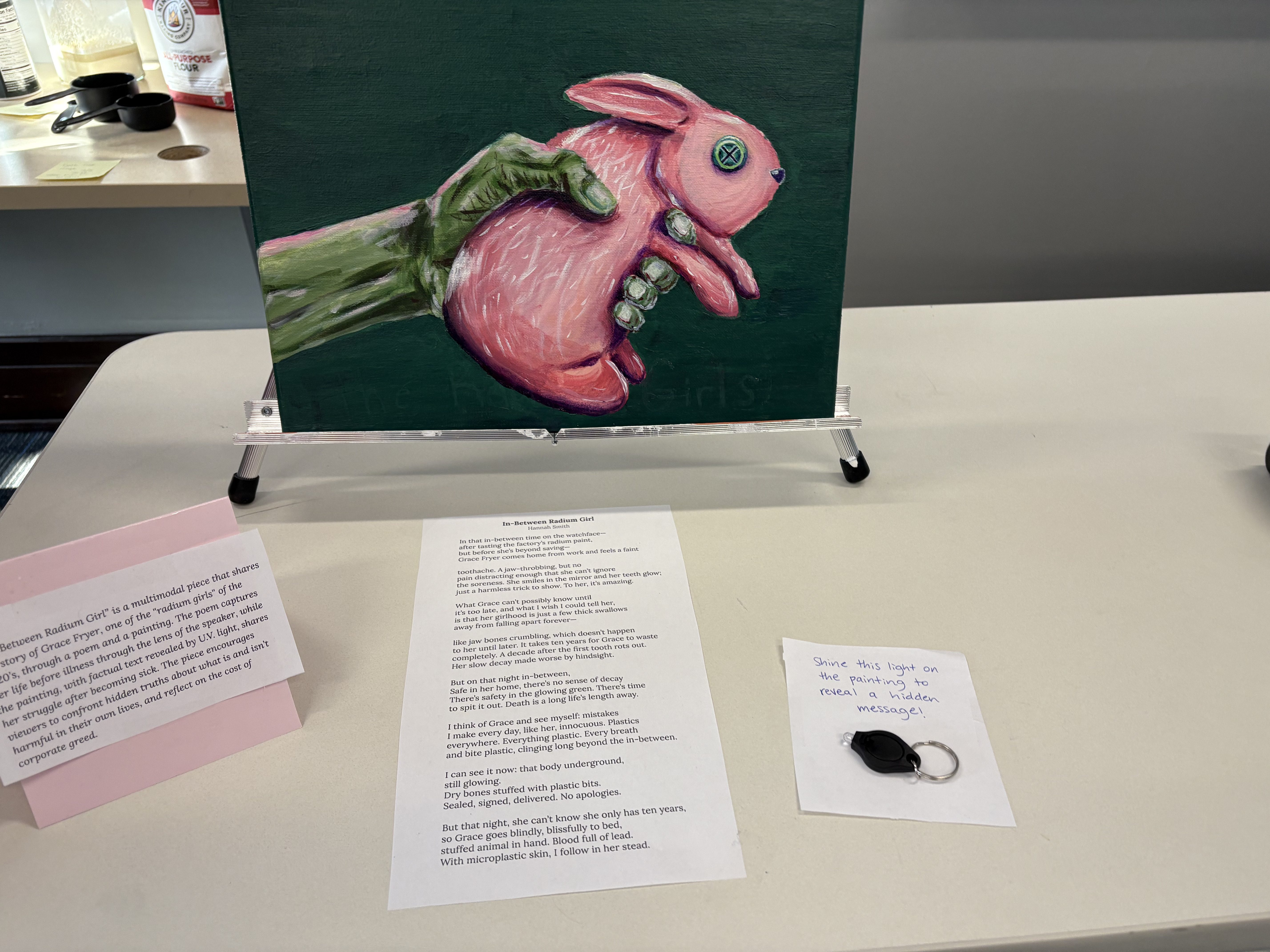
On December 6, 2024, students in the English 5450: Multimodal Creative Writing class held a showcase for their final projects. The class, taught by Associate Professor Benjamin Gunsberg, explored different media forms, including writing, film, music, visual art, audio, and performances throughout the semester. For their final project, students were tasked with creating an installation for the showcase.
“I view multimodal composition as a rich and dynamic approach to making meaning. I appreciate how this approach encourages artists to combine multiple media—text, sound, image, and beyond—to create layered, multidimensional work,” Ben says. “A great deal of reading and writing now takes place online, where it's commonplace to find sounds and images paired with words. My hope is that explorations in multimodal writing will encourage students to produce art that takes full advantage of the affordances of these digital spaces.”
The installations were each unique, with students focusing on different modes, themes, and methods of presentation. Projects included a hanging interactive triptych representing capitalism and living in a digital society, an audio and visual representation of a snapshot of a love story, an installation using the Sunday funnies to create new art, an interactive choose-your-path story about overconsumption, a poem within a painting inspired by the Radium Girls, an interactive cosmos for participants to mediate in, and many others.
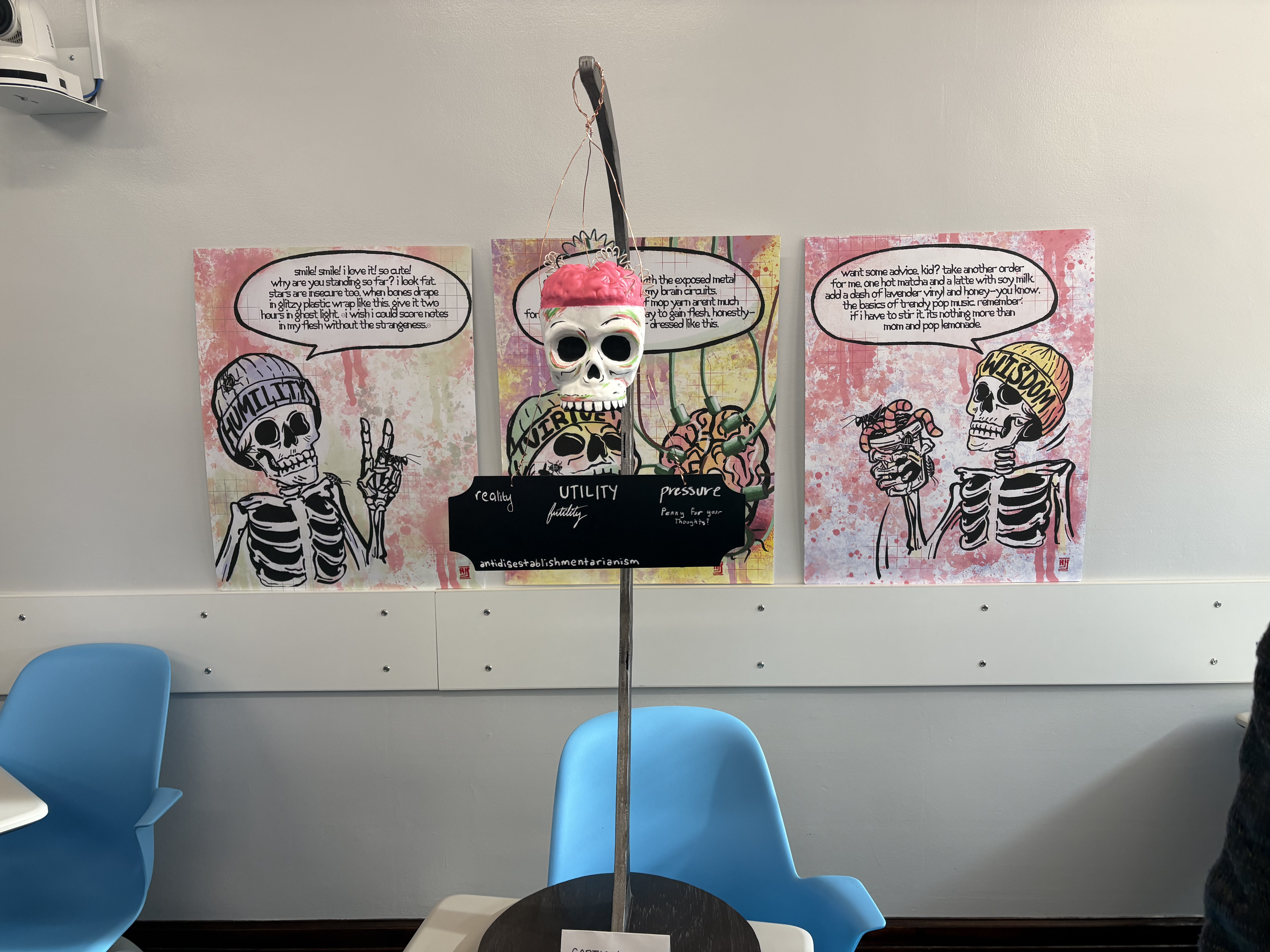
Students in ENGL 3430: Poetry Writing were invited to perform their work during a live show within the event, sharing spoken word, slam poetry, and music. Audience members were able to walk through the installations at their own pace, interacting by listening, clicking, writing, drawing, and arranging the art.
The students in the class said preparing for the showcase and learning throughout the semester broadened their idea of what writing and art could be. “I loved how creative it was. I was surprised,” Isaac Carpenter comments. “I'm usually focused on my medium of writing, but it was really satisfying to see work and creativity be able to be expressed in lots of different ways and beautiful perspectives.”
Zada Stephens adds, “Honestly, this was one of the best English classes that I've ever taken. It was so fun, and I've learned that English in a creative form doesn't just have to be on paper. It can be in a project. It can be in a painting. It can be multiple things. And that's what I really enjoy about multimedia work.”
Caroline Astle organized the event as her multimodal project, planning out the space, gathering the right materials and food, and decorating the room. “Every project I’ve seen has been so fun,” she reflects. “In writing, you can learn a lot about a person, but something about multimodal work is you can learn more in a shorter amount of time. I think more aspects of personality are brought in, which is really cool.”
Throughout the semester, students were able to adapt some of their old work into multimedia projects as well as create new pieces. “I loved being able to add new layers and keep building on things,” Emma Frank says. “I love being able to experiment and have different creative outlets.”
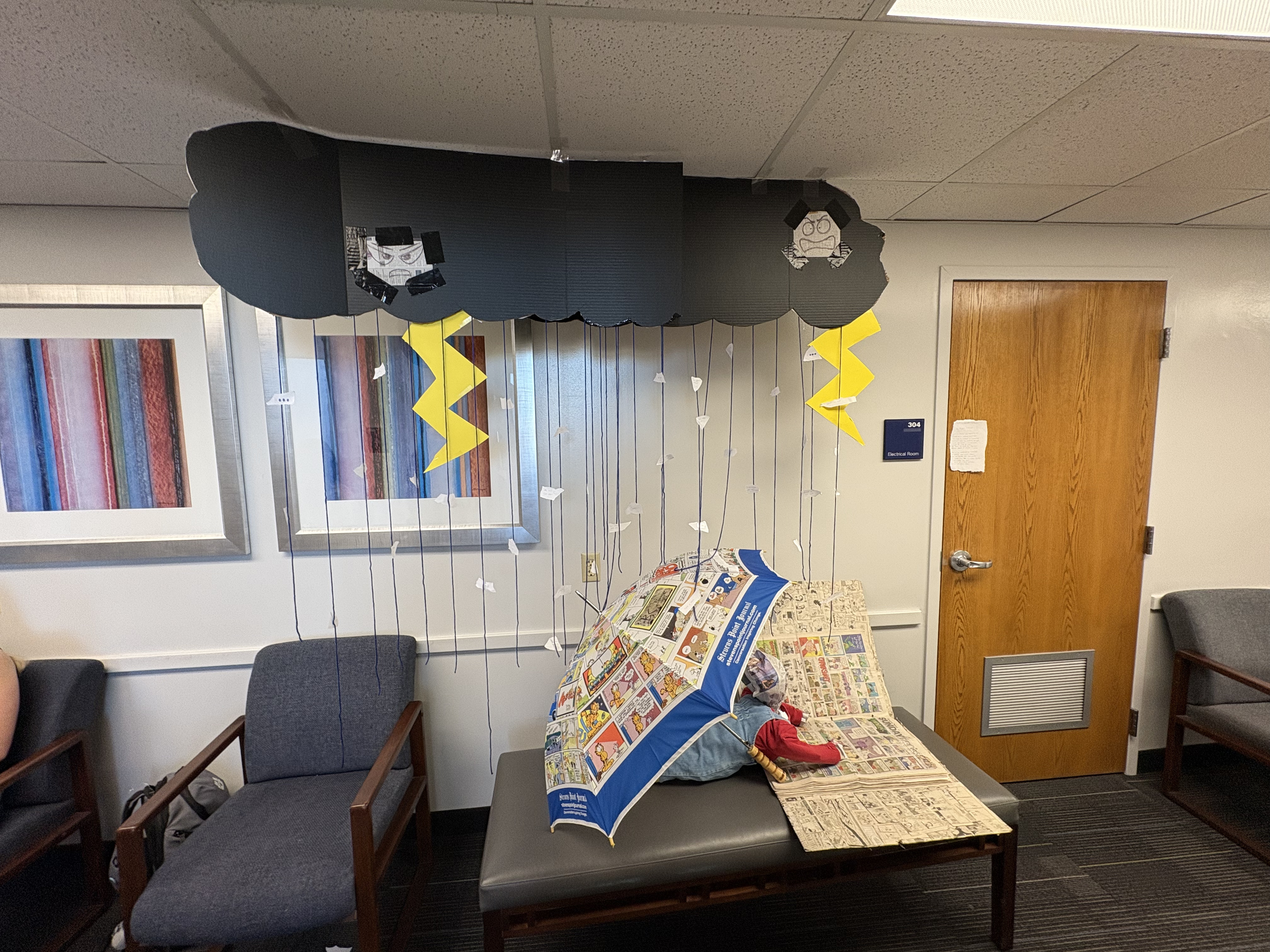
Abby Hong reflected on learning new skills through the class: “The biggest thing I learned was just to be willing to experiment. There were a lot of things I wasn’t comfortable with when we first started, like editing audio or coding. It inspired me to push through my comfort zone and try new mediums. That’s really what allowed me to do my project.”
The class and showcase sparked discussions and ideas among the students that furthered their individual creativity, which Ben said was inspiring to watch and be a part of. He comments, “I enjoy teaching this class because I get to witness students exploring new ways of communicating their thoughts and feelings. The blend of text, visuals, sound, and other media allows for innovation and experimentation. This class also offers the chance to nurture critical thinking by encouraging students to consider how form and content interact in meaningful ways.”
The students encourage others to look for and appreciate art and composition they might not be familiar with. “Even if it’s not something you’d see in a museum,” Alyssa McDougal says, “it can still be a beautiful piece of art.”
As Hannah Smith puts it, “There’s more than one kind of poem.”