
Plants, Place, and Digital Storytelling in Introduction to Poetry
Students left ENGL 2240: Introduction to Poetry with skills not only in literary analysis but also in research, data, and digital storytelling. In Spring 2026, undergraduates in Assistant Professor Kylan Rice’s course created web-based maps that present their research about specific plants and the way these plants have been written about as geographical markers by poets over time. The course specifically focused on poetry and place, with this project allowing students to dive deeper into a plant tied to a specific place.
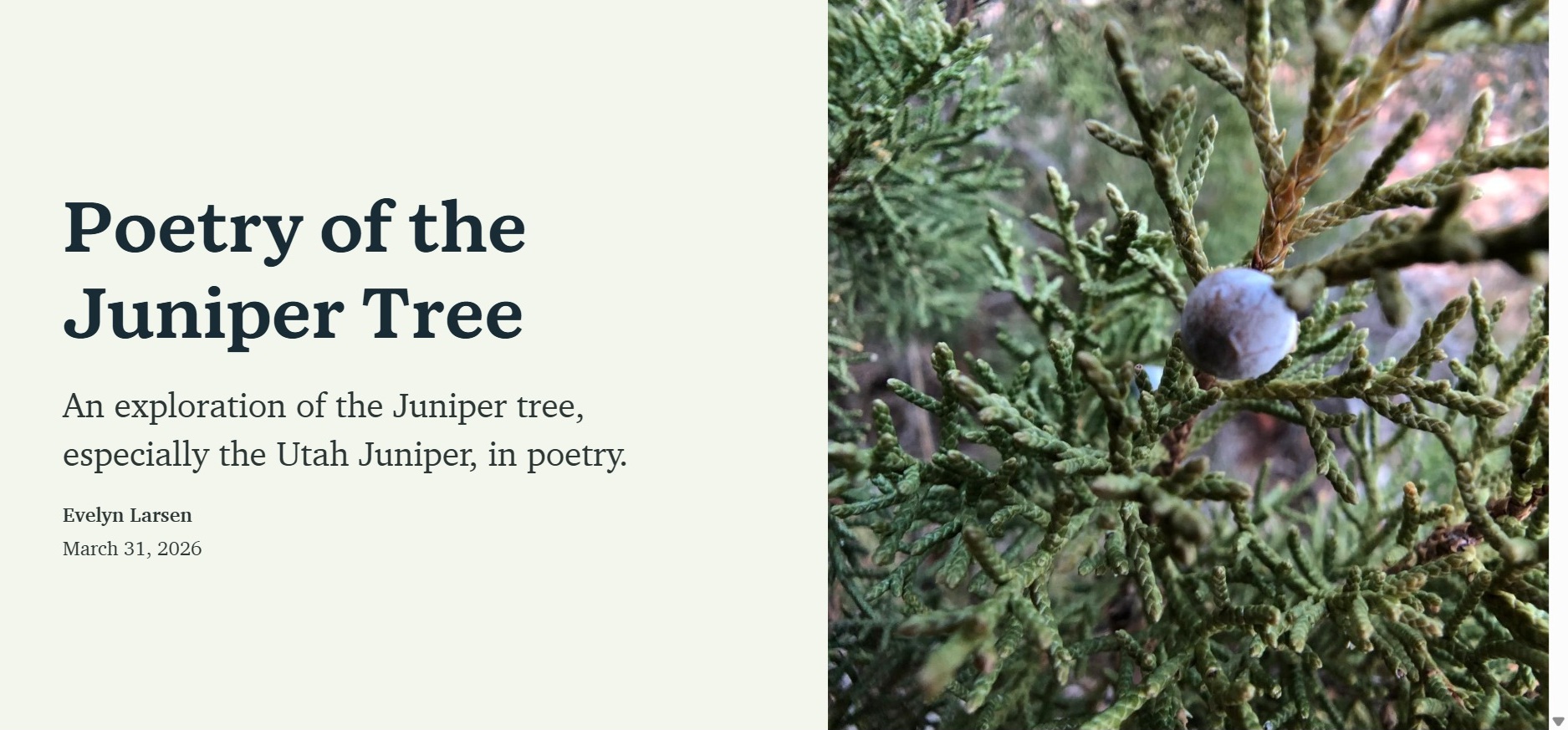
For Evelyn Larsen, that plant was the Utah Juniper. She reflects, “It’s so easy to walk through an entire day without thinking about any of the things we’re walking past. But there’s something really magical about taking a moment to sit and consider the nature around us. Take the Juniper trees; one Utah Juniper in normal conditions can live to be up to 650 years old. You could sit by a tree today that someone else sat under 300 years ago. How many roots connect a juniper to its environment, and how many branches reach out to touch the ever-changing people around it?”
Evelyn enjoyed having the opportunity to consider the juniper tree through someone else’s view — particularly that of a poet — after seeing so many throughout her life. She adds that the experience taught her “even poems about the same subject are as different from each other as one plant is from its neighbor.”
Monroe Waldron researched the sagebrush and its representation over time in poetry, which highlighted the human’s perspective on the plant, as well as ecological insights.
“I enjoyed this project because I had creative freedom within ArcGIS StoryMaps, and I love studying plants,” Monroe comments. “This was a unique approach to study a plant, and I’m so glad it was a part of my course! I learned so much about the connection that humans can have with the natural world, including plants.”
Now, five of the maps are publicly available for anyone to explore and learn from. Those interested can learn about the Lily of the Valley’s association with femininity, time, and grief or the childish yet reflective symbolism of the Phlox Longifolia. From the resilient Quaking Aspens to the paradoxically religious and secular Sego Lily to the long-standing, stable Junipers, readers can learn about plant representation in poetry across time periods, across writers, and across audiences.