
USU English Faculty Present at Roosevelt STEAM Expo
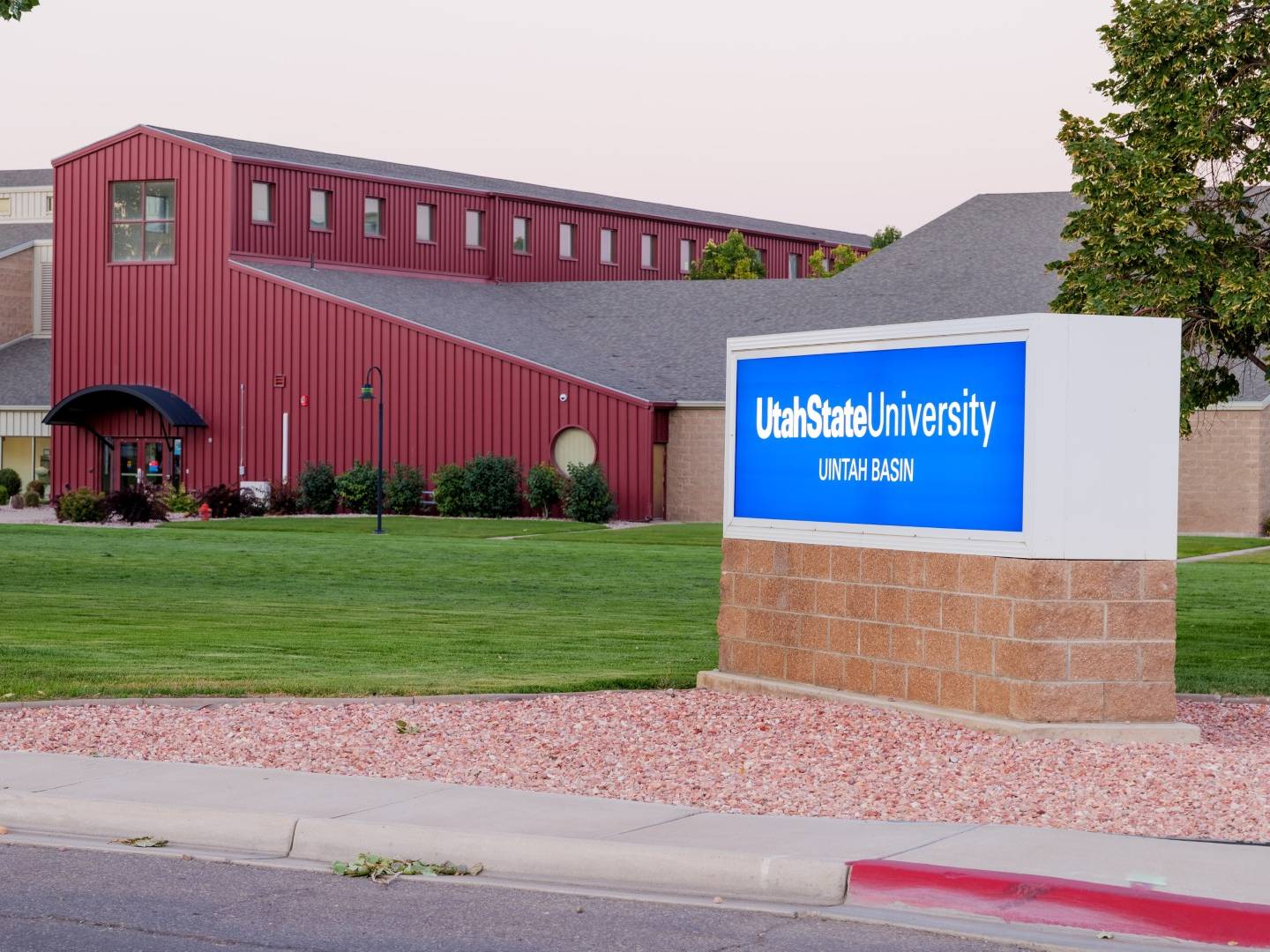
Senior Lecturer Kim Hales, Assistant Professor Amanda Plaizier, and Associate Professor Beth Buyserie collaborated on an interactive lesson at the K-12 STEAM Expo. Gathering 1,500 students and 50 exhibitors in Uintah Basin at the USU Roosevelt Campus, the Expo worked to connect students with opportunities and careers in Science, Technology, Engineering, Arts, and Mathematics (STEAM).
“This project invites students to our local campus where they interact with professionals in a variety of STEAM fields, including English!” Kim reflects.
Kim, Amanda, and Beth presented an interactive lesson about data storytelling. They showed charts and data exploring a variety of topics, from teenage cell phone use and mental health to wildfires. “Our activity focused on data storytelling and community engagement with writing. We invited students to look at visuals and make connections with their own community,” Kim recalls. “We shared ways that data can improve storytelling as well as the use of images.”
The storytelling aspect comes partly from the ability to make educated guesses about the causes of the data, to find the stories that caused them, but it also connects to encouraging students to find ways to write their own stories with this data.
Amanda describes the way this activity functioned, specifically around the subject of wildfires. “From this data, students wrote about how this impacts the future of wildfires, who they felt needed to know about this problem, and how it could further impact them,” she reflects. “Students who live on rural farms, for example, pointed out how the lack of rain and fire danger meant less garden space and smaller alfalfa yields.”
With their lesson, they hoped to show that English is, and always has been, a part of the STEAM field. Although the arts are frequently treated as something separate from the sciences, this couldn’t be further from the truth. The two have always been working together.
“Community engaged learning, working with community partners, and using visual rhetoric in composition are all core components of our work, and this is an excellent opportunity to explore and celebrate that with future students,” Kim explained.
Rather than being different, Amanda says they heighten one another. “Quantitative data requires context; being able to interpret data and communicate effectively is essential.” She adds that the English Department provides, “indispensable communication and professional writing skills that can elevate work across many fields as students enter an ever-evolving workspace.”
This topic is especially important to them with the upcoming data storytelling course offered in Spring 2027, which will explore these ideas more in depth. If the course receives the same excitement it got at the Expo, then it will surely succeed.
At the heart of this Expo was an emphasis on connecting with communities of students. They hoped to show that rural students can access academic and professional career development, and that these pursuits have a place within their own communities.
“Students were able to see on a large scale the ways in which their local Statewide USU Uintah Basin campus supports their learning and future professional development. The largest benefit was perhaps representation, as students were able to see people who live where they live and see what learning opportunities abound in the Basin,” Amanda explained.
For all involved, this created a welcoming space. “I appreciated the incorporation of the arts into STEM to make STEAM!” she recalls. “There were so many local companies and organizations represented that it truly reflected the community where the students live.”