
Ella Stott Wins the David and Terry Peak Prize for Undergraduate Researcher of the Year
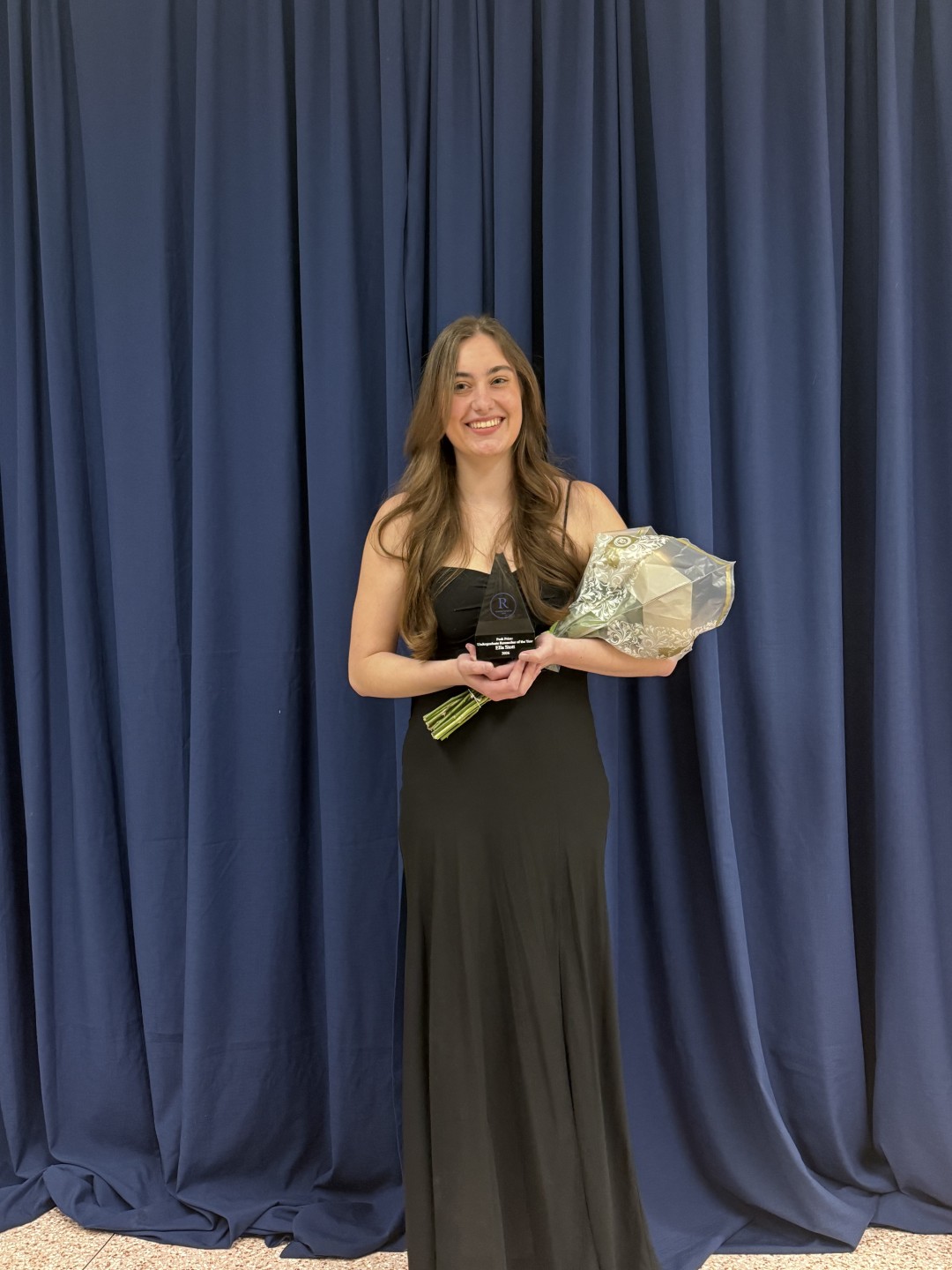
Ella Stott, a graduating senior studying creative writing, was awarded the 2026 David and Terry Peak Undergraduate Researcher of the Year Award.
Ella started her project in her first year at USU in 2023 with the help of her research mentor English Department Professor Jennifer Sinor.
“Before arriving at USU, I wrote a memoir that won second place in full-length nonfiction in the Utah Original Writing Competition, and I wanted to write a second memoir about my experience with religion and trauma,” Ella reflects.
Together, Ella and Jennifer examined other memoirs and elements like voice and structure in nonfiction writing. During her first year, Ella wrote a chapbook with nine pieces of flash nonfiction in response to their readings. That summer, she received the CHaSS Faculty Student Summer Mentorship Grant, which she used to write the first half of her second memoir. Last summer, she received the Peak Fellowship to write the second half then revised the memoir as her Honors Capstone.
“I'm so thankful to have creative work recognized as important research at the university level,” Ella says. “The chapbook and the memoir are works I'm very proud of, and I've always written with the goal of providing a voice for others who have gone through similar experiences to mine, so I'm extraordinarily grateful to know the writing I'm doing does have an impact.”
Ella mentions that the most rewarding part of the research experience was being mentored by Jennifer.
“Being mentored by her for three years is something I won't ever forget and that I'm eternally grateful for. Additionally, just being able to be more deeply engaged with such an incredible department was rewarding for me. The English Department is a such a gem at USU,” she comments.
During her time at USU, Ella also worked on a group project with Professor Christine Cooper-Rompato, studying Black history in Utah. The team worked on archival research, interviews, presentations at conferences, and a travelling museum exhibit.
“My advice for students who want to get involved in undergraduate research in the humanities is to create your own opportunities! Professors want to help you engage more deeply in literature or writing, so just have conversations with them and see what you can start working on together,” Ella says. “Don't ever think your research, especially if it is in creative writing, doesn't count as ‘research.’ It's such a broad umbrella, but we sometimes think it only consists of scientific papers or hands-on quantitative studies. Humanities research is so important, and if anything, I hope this Robins Awards can showcase that.”