
English Department Undergraduates Attend UCTE Conference
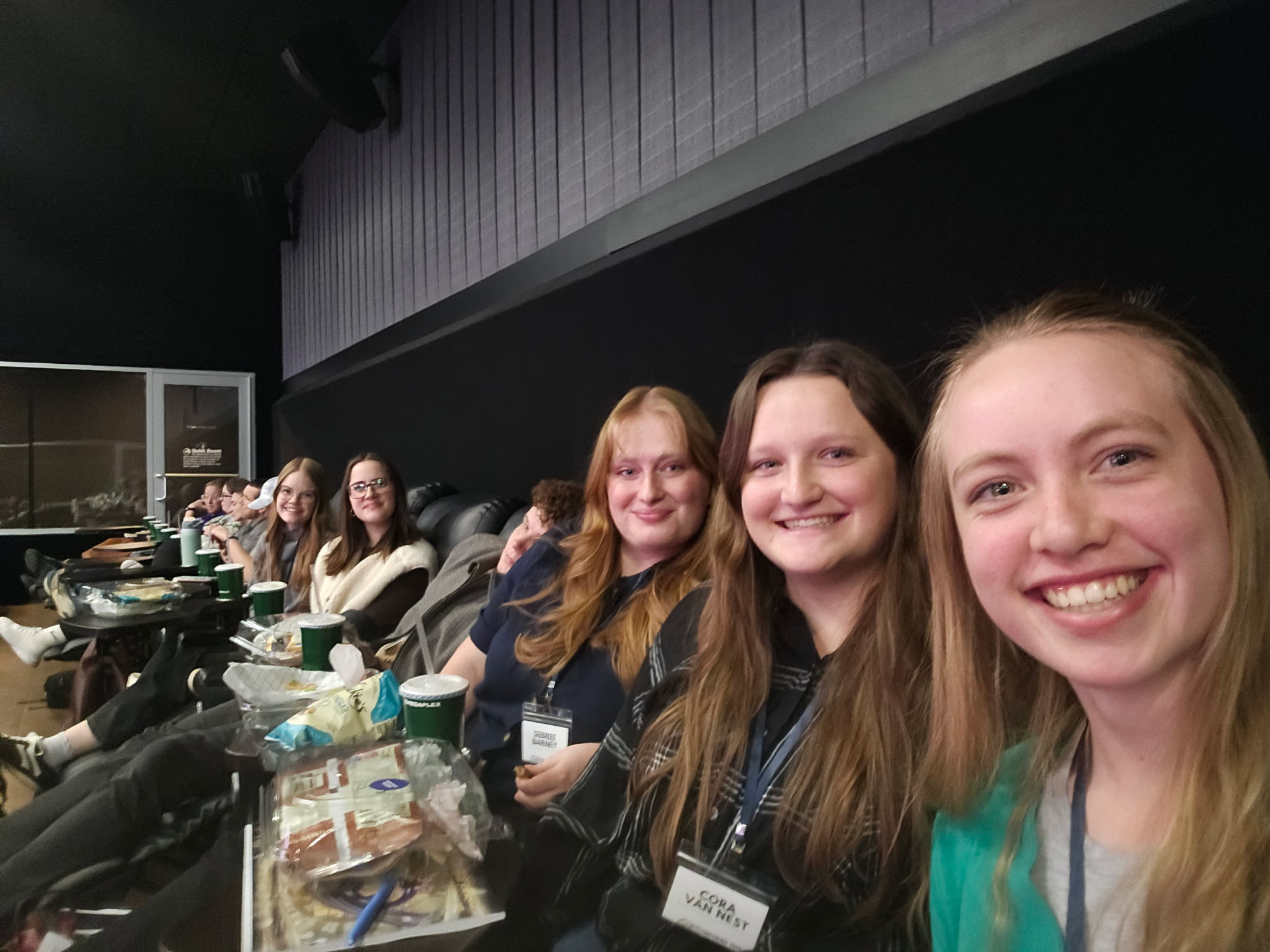
Eight English Teaching undergraduate students joined Assistant Professor Taylor Rose-Dougherty in attending the 2026 Utah Council of Teachers of English Conference in Sandy. On February 20, 2026, the group met with and learned from other aspiring and current English teachers, and one student, Braden Shaffer, presented in the “The Future is Now” roundtable discussion.
Braden’s presentation, “Minimalism as a Tool for Learning,” explored research on leveraging classroom space to boost student productivity and focus.
“I was inspired by a middle school teacher in Cache Valley. His wall decor, whiteboard space, and slideshows all prioritized presenting relevant information, rather than typical English teacher posters and word charts,” Braden explains. “I enjoyed the research and collaboration process most of all. Talking through my ideas with a trusted professor helped me refine my ideas, both for the presentation and my own practice.”
Taylor co-chaired the event as a UCTE Board Member and introduced the keynote speaker, renowned author Ruta Sepetys. Being part of the conference planning, between arranging the keynote and breakout sessions and balancing the interests of attendees, was an opportunity for Taylor to foster excitement in all types of English teachers.
“I loved co-chairing the conference because it brings so many kinds of English Language Arts teachers together in the spirit of curiosity and learning; there are higher education folks, in-service teachers, pre-service teachers — both graduate and undergraduate — in attendance,” she reflects. “Attending the conference provides benefits for students because they don’t just get to take part in conversations about relevant and timely theoretical, empirical, and practitioner-oriented teaching ideas, but they also get to network and broaden their professional community with engaged and invested English teachers across the state.”
For student Kayleigh Kearsley, the best part about attending the conference was learning about new, research-based engagement strategies she will be able to implement into her own classroom. She notes, “As a student teacher, I am always looking for new strategies and tools that I can implement to increase student engagement and learning. The UCTE conference was an exceptional opportunity to dive into new ways to teach and empower my students, and I have greatly enjoyed incorporating them into my teaching.”
At the conference, UCTE’s annual publication, The Utah English Journal, was handed out. In this edition, Kayleigh published her research article entitled “Incorporating Texts with People with Disabilities Amidst Scripted Curricula,” and Taylor co-authored the published article “The Future of the English Class Essay.”
About her article, Kayleigh says, “I’m an advocate for allowing each of our students to see themselves in the texts read in the classroom, as well as exploring others’ perspectives and abilities. Even amidst a scripted curriculum, I believe that teacher agency should be used to advocate for their students and their identities in this way. As I was researching this, I realized that while textual diversity with regards to religion and race were often represented in the classroom, many teachers fail to incorporate texts representative of individuals with disabilities in their classroom, which is what my journal article called attention to. I advocated for ensuring these students were represented in classroom texts to ensure that all students thrive and belong in the classroom.”
Kayleigh was quick to note Taylor’s mentorship and feedback on her work: “This allowed me to write an article I am very proud of, and the opportunity to have that published in a format where it will actually reach in-service teachers is humbling.”
Taylor’s article in the journal, co-authored with Christy Goldsmith, explored what powerful classroom writing can look like in the era of Generative AI. She explains, “We assigned a multimodal composition called the ‘unessay’ to my graphic novels and narratives class here at USU, and students took up the challenge in ways that demonstrated a rich understanding of comic conventions, graphic rhetoric and visual literacies, and a vast creativity, all while maintaining more traditional steps of the academic composition process. In this new compositional space, students could achieve what traditional essays set out to do yet sometimes fall short of.”
Braden said he left the conference inspired by the dedication of so many instructors to continue refining their own practices. “The atmosphere of professionalism and shared commitment to improvement is contagious and such a necessary experience as a teacher in the current day and age,” he comments.